
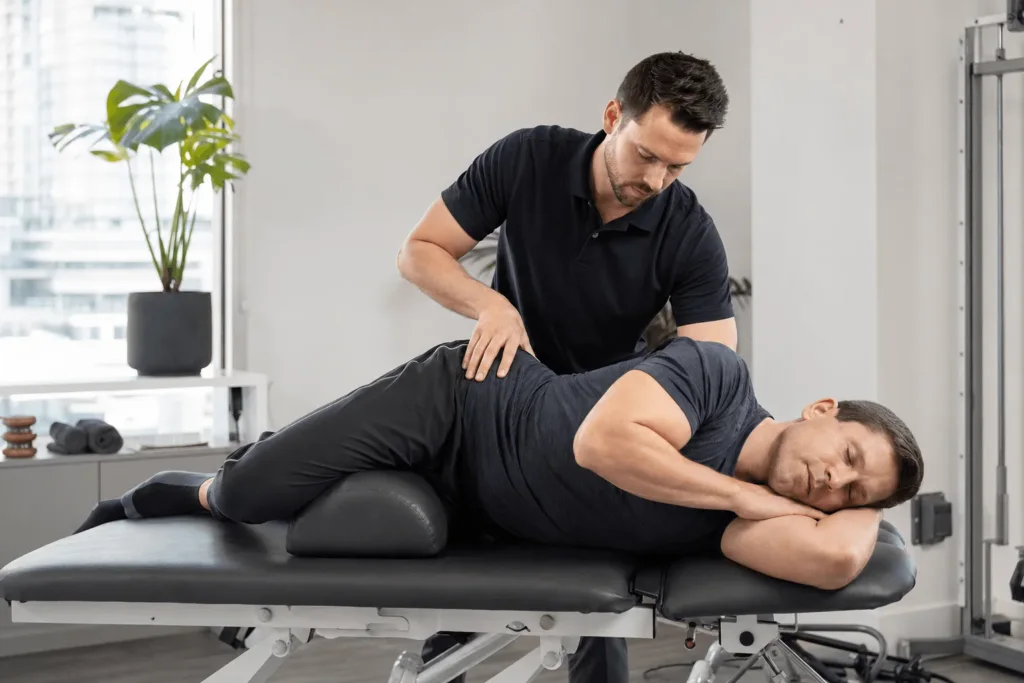
If you’re dealing with shooting leg pain that radiates from your lower back down to your foot, you’re likely wondering whether physiotherapy can actually help sciatica. The short answer is yes: physiotherapy for sciatica uses evidence-based manual therapy, targeted exercises, and pain-relieving modalities to address the root cause of sciatic nerve compression and restore normal movement patterns. This article breaks down exactly how physiotherapy treats sciatica, what techniques work best, realistic recovery timelines, and when you should seek professional treatment versus managing symptoms at home.
Quick Answer
Physiotherapy effectively treats most sciatica cases through manual therapy, nerve mobilization exercises, core strengthening, and pain-relief modalities. Most patients see significant improvement within 6-8 weeks when following a structured treatment plan that addresses the underlying cause.
What Is Sciatica? Understanding the Sciatic Nerve and Symptoms
Sciatica refers to pain that follows the path of the sciatic nerve, which runs from your lower back through your hips and buttocks and down each leg. The sciatic nerve is the longest and thickest nerve in your body, about as wide as your thumb at its origin point.
When this nerve becomes compressed or irritated, it triggers a distinctive pattern of symptoms. The pain doesn’t stay localized in your back. It travels.
True sciatica typically affects only one leg, though the exact location and intensity varies depending on which nerve root is compressed. The lumbar spine has five vertebrae, and sciatic nerve pain usually stems from compression at the L4, L5, or S1 nerve roots.
Common Sciatica Symptoms: What Does It Feel Like?
Sciatica pain varies widely between patients. Some describe electric shocks shooting down their leg. Others experience a constant dull ache that worsens with sitting or standing.
Common symptoms include sharp, burning pain along one leg, numbness or tingling in the leg or foot, muscle weakness in the affected leg, and pain that worsens with prolonged sitting or sudden movements. The pain often intensifies when coughing, sneezing, or laughing because these actions increase spinal pressure.
Many patients notice their symptoms change throughout the day. Sitting at a desk job in North York’s office buildings often aggravates sciatic nerve pain, while gentle walking provides temporary relief.
Is Your Pain Really Sciatica? Self-Assessment Guide
Not all leg pain is sciatica. Hip arthritis, sacroiliac joint dysfunction, and piriformis syndrome can all mimic sciatic nerve pain.
Try this simple self-assessment: If your pain travels below your knee and into your foot, it’s more likely true sciatica. Pain that stops at your hip or thigh might be referred pain from your lower back but not actual nerve compression. If you experience numbness or tingling alongside the pain, nerve involvement is likely.
The straight leg raise test provides another clue. Lie on your back and have someone slowly lift your painful leg while keeping your knee straight. If this reproduces your leg pain before reaching 70 degrees, it suggests sciatic nerve irritation.
Key Takeaways
- Expect physiotherapy to reduce sciatica pain through manual therapy and exercises.
- Choose treatment addressing your specific cause: disc, stenosis, or piriformis syndrome.
- Seek immediate medical care for bowel/bladder changes or progressive weakness in both legs.
- Plan for 6-8 weeks of consistent treatment for significant symptom improvement.
- Verify your pain travels below the knee before assuming it’s sciatica.
Common Causes of Sciatica: From Herniated Discs to Piriformis Syndrome
Sciatica is a symptom, not a diagnosis. The actual cause determines which physiotherapy techniques will work best.
Herniated or bulging lumbar discs represent the most common cause of sciatica. When the soft inner material of a spinal disc pushes through its outer layer, it can press directly on nerve roots. This typically happens at the L4-L5 or L5-S1 levels. Disc-related sciatica requires extension-based exercises and positioning that reduces posterior pressure on the nerve.
Lumbar spinal stenosis, a narrowing of the spinal canal, becomes more common after age 50. This condition creates gradual compression of nerve roots rather than the acute onset often seen with disc herniation. Stenosis patients need flexion-based exercises that open the spinal canal, the opposite approach from disc herniations.
Piriformis syndrome occurs when the piriformis muscle in your buttock spasms or tightens, compressing the sciatic nerve that runs beneath it. This cause responds particularly well to hip rotator stretching and manual therapy techniques that release muscle tension.
Spondylolisthesis (vertebral slippage) and sacroiliac joint dysfunction require stabilization exercises to prevent excessive movement at affected segments. Each underlying cause requires a slightly different treatment approach, which is why accurate assessment matters.
When treating sciatica from herniated discs versus piriformis syndrome, we adjust exercise direction completely. Disc patients often need extension-based McKenzie exercises, while piriformis cases require hip flexor and rotator stretches. Getting this wrong delays recovery significantly.
Can Physiotherapy Help Sciatica? The Evidence-Based Answer
Yes, physiotherapy treats sciatica effectively for most patients. Research consistently shows that structured physiotherapy reduces pain, improves function, and helps patients avoid surgery.
A 2020 systematic review found that patients receiving physiotherapy for lumbar radiculopathy (the clinical term for sciatica) experienced significantly greater pain reduction and functional improvement compared to those who received minimal intervention or advice alone.
Physiotherapy works by addressing multiple aspects of sciatica simultaneously. It reduces nerve compression through targeted positioning and exercises, decreases inflammation around the affected nerve root, improves spinal mobility to reduce mechanical irritation, strengthens core muscles to prevent recurrence, and teaches movement patterns that avoid aggravating the nerve.
The success rate varies depending on the underlying cause and how long you’ve had symptoms. Acute sciatica (less than six weeks) responds better than chronic cases, though even long-standing sciatic nerve pain improves with appropriate treatment.
One key advantage: physiotherapy treats the cause, not just symptoms. Pain medication might temporarily mask discomfort, but it doesn’t address why your disc is herniated or why your piriformis muscle is compressing your nerve.
Ready to start your recovery?
Our multidisciplinary team in North York offers physiotherapy, chiropractic, massage therapy, and more under one roof. Direct billing available, no referral needed.
How Physiotherapy Treats Sciatica: Techniques and Treatment Approaches
Physiotherapy for sciatica isn’t a single treatment. It’s a coordinated approach combining several evidence-based techniques tailored to your specific presentation.
Your first session involves comprehensive assessment. Your physiotherapist evaluates your posture, movement patterns, muscle strength, nerve tension, and reflexes. They’ll ask about your pain location, what makes it better or worse, and how it affects your daily activities. This information determines which techniques to prioritize.
Manual Therapy and Hands-On Techniques
Manual therapy includes joint mobilization, soft tissue release, and neural mobilization. These hands-on techniques reduce pain quickly and restore normal movement patterns.
Spinal mobilization applies gentle, controlled movements to stiff vertebral segments. When your L5-S1 joint isn’t moving properly, it increases stress on surrounding tissues and nerves. Mobilization restores this movement, often providing immediate pain relief.
Soft tissue techniques target tight muscles that contribute to nerve compression. Your physiotherapist might release your piriformis, hip flexors, or lumbar paraspinal muscles using sustained pressure, muscle energy techniques, or instrument-assisted soft tissue mobilization.
Neural mobilization, also called nerve gliding or nerve flossing, involves specific movements that gently stretch and mobilize the sciatic nerve. These exercises help the nerve move freely through surrounding tissues rather than getting stuck or compressed.
Therapeutic Modalities: Dry Needling, Electrotherapy, and More
Physiotherapists use several modalities to reduce pain and inflammation in acute sciatica phases.
Dry needling for nerve pain targets trigger points in muscles that refer pain down the leg. By inserting thin needles into these tight muscle bands, physiotherapists release tension and improve blood flow. This technique works particularly well for piriformis-related sciatica.
Electrotherapy, including TENS and interferential current, uses electrical stimulation to block pain signals and reduce muscle spasm. Ultrasound therapy delivers deep heat to affected tissues, promoting healing and reducing inflammation around compressed nerve roots.
The McKenzie Method for Directional Preference
The McKenzie Method deserves special mention. This assessment and treatment system uses specific repeated movements and positions to centralize pain (move it from your leg back toward your spine). Centralization indicates improvement and helps identify which exercises will work best for your specific disc problem. Your physiotherapist tests different positions to determine whether extension, flexion, or lateral movements reduce your symptoms, then builds your program around that directional preference.
When to Seek Physiotherapy for Sciatica (and Red Flags That Need Immediate Care)
Not all sciatica requires immediate professional treatment, but waiting too long can lead to prolonged recovery or permanent nerve damage.
Seek physiotherapy if your sciatic nerve pain lasts more than a week without improvement, if pain significantly interferes with daily activities like work or sleep, if you experience numbness or tingling alongside pain, or if you’ve had multiple sciatica episodes. Early intervention typically leads to faster recovery.
You don’t need a referral to see a physiotherapist in Ontario. You can book directly at physiotherapy services like those offered at our North York location.
Red Flag Symptoms Requiring Immediate Medical Attention
Certain red flag symptoms indicate serious conditions that need emergency assessment, not physiotherapy. Recognize these warning signs and act immediately.
Cauda equina syndrome is a surgical emergency occurring when compression affects the bundle of nerves at the base of your spinal cord. Symptoms include loss of bowel or bladder control (inability to urinate or defecate, or loss of sensation when using the bathroom), numbness in the saddle area (groin, inner thighs, and area that would contact a bicycle seat), progressive leg weakness in both legs rather than one, and severe or rapidly worsening neurological symptoms. If you experience these symptoms, go to the emergency department immediately. Delayed treatment can result in permanent nerve damage affecting bladder, bowel, and sexual function.
Progressive muscle weakness that worsens over days rather than improves also warrants urgent medical evaluation. While some temporary weakness is common with sciatica, rapid progression suggests severe nerve compression requiring intervention. Foot drop (inability to lift the front of your foot) represents significant weakness needing prompt assessment.
Sciatica accompanied by unexplained weight loss, fever, or night sweats might indicate infection or other serious conditions. These symptoms require medical investigation before starting physiotherapy. History of cancer combined with new-onset sciatica needs prompt medical assessment to rule out metastatic disease affecting the spine.
For most sciatica cases without red flags, physiotherapy provides safe, effective treatment. ProMed Wellness Centre’s multidisciplinary team can assess your condition and refer you for additional imaging or medical consultation if needed.
Exercises and Stretches for Sciatica Relief: A Staged Progression
Exercise forms the foundation of successful sciatica recovery. But not all exercises help all patients, and timing matters enormously. The wrong exercise at the wrong stage can worsen symptoms. This is why exercises for sciatica follow a careful progression from pain relief to strength building to prevention.
Early Stage Exercises: Gentle Mobility and Pain Relief
When sciatica is acute and painful, your primary goal is reducing nerve irritation and finding positions of comfort.
Prone press-ups (McKenzie extensions) work for many disc-related sciatica cases. Lie face down and gently press your upper body up while keeping your hips on the floor. This position often reduces pressure on posterior disc herniations. Start with partial press-ups and progress only if your leg pain decreases.
Pelvic tilts performed lying on your back help restore gentle lumbar movement without aggravating symptoms. Rock your pelvis forward and back, flattening and arching your lower back slightly.
Knee-to-chest stretches relieve pressure for stenosis-related sciatica. Lying on your back, gently pull one or both knees toward your chest. This flexion-based position opens the spinal canal.
Neural glides involve gentle movements that mobilize the sciatic nerve. One common version: sit with your painful leg extended, ankle flexed. Gently straighten and bend your knee while moving your ankle up and down. This flossing motion helps the nerve glide freely.
Walking remains one of the best early-stage activities. Short, frequent walks (5-10 minutes several times daily) maintain blood flow and prevent stiffness without overloading healing tissues.
Mid-Stage Exercises: Strengthening and Stabilization
Once your acute pain subsides and you can move without severe symptoms, strengthening becomes the priority. Core strengthening protects your spine from future injury. Dead bug exercises, bird dogs, and planks build deep core stability. These exercises teach your core muscles to support your spine during daily activities, reducing stress on discs and nerves.
Gluteal strengthening addresses a common weakness pattern. Bridges, clamshells, and side-lying leg lifts target the gluteus maximus and medius. Strong glutes stabilize your pelvis and reduce compensatory stress on your lower back. Piriformis and hip rotator stretches reduce muscle-related nerve compression using figure-4 stretches and seated piriformis stretches.
Late-Stage Exercises: Functional Training and Prevention
Functional exercises prepare you to return to normal activities. Squats, lunges, and lifting mechanics training ensure you can perform daily tasks without re-injury. For North York residents returning to physical jobs in warehouses along Finch Avenue or active lifestyles, this functional training phase prevents recurrence. Exercises progress to sport-specific or work-specific movements that replicate your daily demands. Maintenance exercises continue indefinitely with a 10-15 minute daily routine.
Activity Modifications and Ergonomic Strategies for North York Workers and Residents
How you sit, stand, sleep, and move throughout your day significantly impacts sciatica recovery. Specific modifications address common activities among North York residents and workers.
Office Work and Computer Ergonomics
For office workers along North York’s Finch Avenue corridor, sitting posture requires careful attention. Adjust your chair so your feet rest flat on the floor with knees at hip height or slightly lower. Use a small lumbar roll or rolled towel to support your lower back’s natural curve. Position your monitor at eye level to prevent forward head posture that increases spinal stress.
Take standing breaks every 30 minutes. Even 30 seconds of standing and gentle movement reduces disc pressure and prevents stiffness. Set a phone reminder if needed. Consider a sit-stand desk that allows position changes throughout the day. When typing, keep your keyboard at elbow height with shoulders relaxed.
Driving and Commuting Modifications
For those commuting on Highway 401 or driving for work throughout North York, proper vehicle setup reduces sciatic nerve irritation. Adjust your seat so your knees are level with or slightly higher than your hips. This position reduces pressure on your lower back and sciatic nerve. Move your seat close enough that you don’t have to reach for pedals, which increases lumbar flexion stress.
Use cruise control when possible on highway drives to avoid constant ankle flexion. Recline your seat slightly (100-110 degrees) rather than sitting bolt upright, which increases disc pressure. Place a small lumbar support behind your lower back. On drives longer than one hour, stop every 60 minutes to walk briefly and perform gentle stretches.
Childcare and Home Activity Adaptations
Parents caring for young children face unique challenges. When lifting children, squat down to their level rather than bending from your waist. Keep the child close to your body and avoid twisting while holding them. When playing on the floor, kneel on a cushion or sit in a supportive chair rather than sitting cross-legged, which increases sciatic nerve tension.
For diaper changes, raise the changing surface to waist height to avoid repetitive forward bending. When bathing children, kneel beside the tub on a cushioned mat rather than bending over the edge. Carry children in properly fitted carriers that distribute weight evenly rather than on one hip.
Sleep Position Optimization
Side sleeping with a pillow between your knees keeps your spine aligned and reduces nerve tension. Back sleeping works for some patients, particularly with a pillow under the knees to reduce lumbar extension. Avoid stomach sleeping, which increases lumbar extension and can aggravate disc-related sciatica. Your mattress should support your spine’s natural curves without excessive sinking.
Sciatica Recovery Timeline: How Long Does It Take to Heal?
The sciatica recovery timeline varies significantly based on severity, underlying cause, and treatment adherence. Understanding realistic expectations helps you stay motivated through the rehabilitation process.
Most acute sciatica cases improve substantially within 6-12 weeks with appropriate treatment. About 50% of patients experience significant pain reduction in the first four weeks. However, complete resolution of all symptoms often takes longer, particularly for numbness and tingling which resolve more slowly than pain.
| Recovery Phase | Timeline | What to Expect |
|---|---|---|
| Acute Phase | 0-2 weeks | Pain management focus, gentle mobility, rest balanced with movement |
| Subacute Phase | 2-6 weeks | Pain reduction, increased activity tolerance, progressive exercise introduction |
| Recovery Phase | 6-12 weeks | Strengthening emphasis, return to normal activities, prevention strategies |
| Maintenance Phase | 12+ weeks | Continued strength building, independent exercise program, periodic check-ins |
Several factors influence how quickly you recover. Younger patients without degenerative changes typically heal faster. Acute sciatica (first episode) responds better than chronic or recurrent cases. Adherence to your home exercise program dramatically affects outcomes. Patients who complete prescribed exercises daily recover approximately 30% faster than those with inconsistent compliance.
The underlying cause matters too. Piriformis syndrome often resolves within 4-6 weeks with consistent stretching and manual therapy. Disc herniations typically need 8-12 weeks, with larger herniations requiring longer recovery periods. Spinal stenosis may require ongoing management and might not completely resolve, though symptoms can be significantly reduced through appropriate exercise and activity modification.
Realistic expectations help. You won’t wake up pain-free after one physiotherapy session. Progress happens gradually. You might notice you can sit 15 minutes longer without pain, or your leg numbness decreases from constant to intermittent. These incremental improvements indicate healing. Track your progress weekly rather than daily to see meaningful changes.
We coordinate physiotherapy exercises with chiropractic adjustments for patients whose sciatica stems from both disc herniation and spinal misalignment. This multidisciplinary approach available at our North York location often shortens recovery time compared to single-discipline treatment alone.
Multidisciplinary Approaches: Combining Physiotherapy with Other Treatments
Sciatica often benefits from coordinated treatment approaches that combine physiotherapy with other therapeutic disciplines.
Chiropractic care for sciatica focuses on spinal alignment and joint function. When vertebral misalignment contributes to nerve compression, chiropractic adjustments can reduce pressure on affected nerve roots. Many patients at ProMed Wellness Centre receive both physiotherapy exercises for stability and chiropractic adjustments for alignment.
Massage therapy reduces muscle tension that contributes to nerve compression. Deep tissue massage targeting the piriformis, gluteal muscles, and lumbar paraspinals decreases muscle-related sciatic pain and improves blood flow to affected areas. Acupuncture provides pain relief for some sciatica patients, particularly those seeking alternatives to medication.
The advantage of treatment at a multidisciplinary clinic like ProMed Wellness Centre in North York is coordinated care. Your physiotherapist, chiropractor, and massage therapist communicate about your progress and adjust treatment collaboratively, ensuring all providers work toward the same goals.
Frequently Asked Questions
What is sciatica and what causes it?
Sciatica is pain that radiates along the sciatic nerve path from your lower back through your hips and down each leg. It’s caused by compression or irritation of the nerve, most commonly from herniated discs, spinal stenosis, or piriformis muscle tightness. The pain typically affects one leg and often includes numbness, tingling, or weakness.
How does physiotherapy help with sciatica pain?
Physiotherapy addresses sciatica through manual therapy to reduce nerve compression, targeted exercises that strengthen supporting muscles, neural mobilization techniques that help the sciatic nerve glide freely, and therapeutic modalities that reduce pain and inflammation. Treatment targets the underlying cause rather than just masking symptoms.
How long does sciatica last and when will I see results from physiotherapy?
Most acute sciatica improves significantly within 6-12 weeks with consistent physiotherapy treatment. Many patients notice some pain reduction within the first 2-4 weeks, though complete recovery takes longer. The timeline varies based on severity, underlying cause, and treatment adherence.
Should I see a physiotherapist or chiropractor for sciatica?
Both physiotherapy and chiropractic care effectively treat sciatica, though they use different approaches. Physiotherapy emphasizes exercise rehabilitation, strengthening, and movement retraining. Chiropractic focuses on spinal alignment and joint manipulation. Many patients benefit from both approaches together, particularly at multidisciplinary clinics where coordinated treatment combines the strengths of each discipline.
What exercises can I do at home to relieve sciatica pain?
Effective home exercises include knee-to-chest stretches, pelvic tilts, prone press-ups for disc-related sciatica (only if they centralize your pain), neural glides to improve nerve mobility, and gentle walking for 5-10 minutes multiple times daily. Start with 5-10 repetitions of each exercise and progress gradually. Exercise selection must match your specific cause, so get professional guidance before starting any program.
Can sciatica be cured permanently or will it keep coming back?
Many sciatica cases resolve completely with proper treatment and don’t recur if you maintain good movement habits, core strength, and ergonomic practices. However, underlying risk factors like disc degeneration increase recurrence risk. Most patients who complete their physiotherapy program and continue maintenance exercises experience either no recurrence or much milder episodes.
Start Your Sciatica Recovery Today
Sciatica responds well to structured physiotherapy treatment that addresses the underlying cause, not just symptoms. With evidence-based manual therapy, targeted exercises, and therapeutic modalities, most patients experience significant pain reduction within 6-8 weeks and return to normal activities without recurring episodes.
ProMed Wellness Centre’s multidisciplinary team in North York provides comprehensive sciatica treatment combining physiotherapy, chiropractic care, and massage therapy when appropriate. We offer direct billing, no referral needed, and convenient access at 2001B Finch Ave West. Book your assessment or call (647) 349-8765 to start your recovery with a personalized treatment plan designed for your specific needs.