
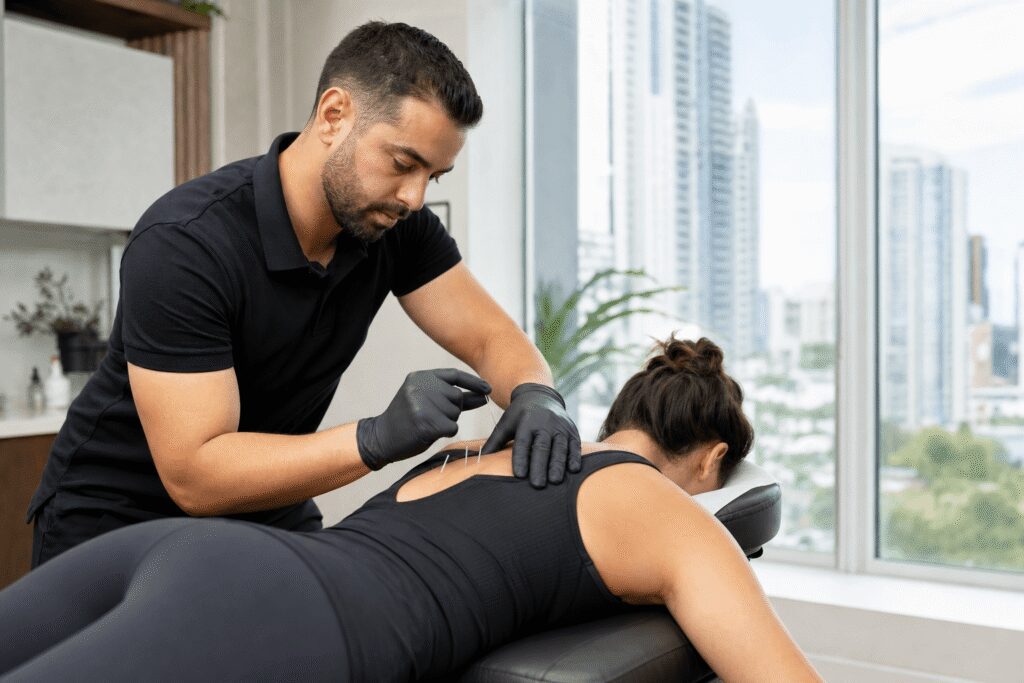
Dry needling physiotherapy is a specialized treatment technique where physiotherapists insert thin, sterile needles directly into myofascial trigger points to relieve muscle pain, reduce tension, and restore normal movement patterns. Unlike traditional acupuncture, this evidence-based approach targets specific anatomical structures based on Western medical principles rather than energy meridians. If you’re dealing with chronic pain, sports injuries, or persistent muscle tightness, understanding how dry needling works and whether it’s right for your condition can help you make informed treatment decisions.
This guide explains the science behind dry needling, what happens during treatment, how it differs from acupuncture, and what conditions respond best to this technique. You’ll learn about safety considerations, expected recovery timelines, and how physiotherapists determine if you’re a suitable candidate for this treatment.
Quick Answer
Dry needling is a physiotherapy technique using thin needles inserted into muscle trigger points to release tension, reduce pain, and improve movement. It treats musculoskeletal conditions through direct muscle stimulation, not acupuncture’s energy pathways.
What Is Dry Needling Physiotherapy?
Dry needling physiotherapy is an invasive treatment modality where registered physiotherapists insert fine filiform needles through the skin to target myofascial trigger points, tight muscle bands, and connective tissue. The term “dry” distinguishes this technique from “wet” needling, which involves injecting substances like corticosteroids or anesthetics.
Physiotherapists use dry needling as part of a comprehensive treatment plan, not as a standalone therapy. The technique aims to release muscular tension, decrease local and referred pain, improve range of motion, and normalize the chemical environment around trigger points.
Trigger point dry needling (TDN) and intramuscular stimulation (IMS) are the two primary approaches. TDN focuses specifically on myofascial trigger points, those tight knots you can sometimes feel in your muscles. IMS, developed by Dr. Chan Gunn, targets the neuromuscular system more broadly, addressing nerve-related muscle dysfunction.
Key Takeaways
- Understand dry needling targets specific muscle trigger points, not energy meridians.
- Expect minor soreness for 24-48 hours after your first treatment session.
- Verify your physiotherapist has completed College-approved dry needling certification courses.
- Ask about combining dry needling with exercise therapy for optimal results.
- Extended health insurance typically covers dry needling as part of physiotherapy benefits.
How Does Dry Needling Work?
When a needle penetrates a myofascial trigger point, it creates a mechanical disruption that triggers several therapeutic effects. Myofascial trigger points are hyperirritable spots in skeletal muscle associated with hypersensitive palpable nodules in taut bands. These points develop from muscle overuse, trauma, poor posture, or chronic stress.
When a needle accurately contacts an active trigger point, you might experience a local twitch response. This involuntary spinal cord reflex causes the muscle fibers to contract briefly. The twitch response mechanically disrupts the trigger point, breaks up contracted muscle fibers, and reduces the concentration of inflammatory biochemicals like bradykinin, substance P, and calcitonin gene-related peptide.
The needle stimulation activates A-delta nerve fibers, which can inhibit pain signals transmitted by slower C fibers. This gate control mechanism provides pain relief. The technique also stimulates the release of endogenous opioids, your body’s natural pain relievers.
We’ve found that patients who perform gentle movement and stretching within 4-6 hours after dry needling experience better outcomes than those who rest completely. Light activity prevents post-treatment stiffness while maintaining the release we achieved.
Dry Needling vs. Acupuncture: Key Differences
Despite using similar needles, dry needling and acupuncture are fundamentally different practices based on distinct theoretical frameworks and clinical goals.
Acupuncture originates from Traditional Chinese Medicine, operating on the principle of Qi (energy) flowing through meridian pathways in the body. Practitioners insert needles at specific points along these meridians to balance energy flow and treat both physical and emotional conditions.
Dry needling comes from Western medicine and anatomy. It targets specific anatomical structures: muscles, fascia, and peripheral nerves. Physiotherapists select needle insertion points based on physical examination findings, palpation of trigger points, and biomechanical assessment, not meridian maps.
The treatment goals differ too. Acupuncture aims to balance the body’s energy systems and treat a wide range of conditions from digestive issues to anxiety. Dry needling focuses specifically on musculoskeletal pain, movement dysfunction, and neuromuscular conditions.
Ready to start your recovery?
Our multidisciplinary team in North York offers physiotherapy, chiropractic, massage therapy, and more under one roof. Direct billing available, no referral needed.
What Conditions Can Dry Needling Treat?
Dry needling addresses a wide range of musculoskeletal conditions, particularly those involving muscle dysfunction, chronic pain, and movement restrictions.
Myofascial pain syndrome is the primary indication for dry needling. This condition involves chronic pain from trigger points that refer pain to other areas. Sports injuries respond well when muscle tension or trigger points limit recovery, including tennis elbow, rotator cuff tendinopathy, hamstring strains, and plantar fasciitis.
Chronic tension headaches and migraines frequently stem from trigger points in neck, shoulder, and jaw muscles. Research shows particular effectiveness for cervicogenic headaches originating from neck dysfunction.
Lower back pain, especially when associated with muscle guarding or spasm, improves with dry needling. The technique can release tight paraspinal muscles, reduce protective muscle tension, and restore normal movement patterns.
Neck and shoulder pain from desk work, poor posture, or whiplash injuries often involves multiple trigger points in the upper trapezius, levator scapulae, and suboccipital muscles. Dry needling these areas, combined with physiotherapy services that address ergonomics and posture, provides comprehensive relief.
What to Expect During a Dry Needling Session
Your first appointment begins with a comprehensive assessment. The physiotherapist reviews your medical history, current medications, and previous treatments. Physical examination includes posture analysis, range of motion testing, and palpation to locate trigger points. The physiotherapist explains the procedure, obtains informed consent, and sets realistic expectations.
You’ll position yourself to allow access to the treatment area while remaining comfortable. The skin is cleaned with alcohol to reduce infection risk. The physiotherapist then inserts needles through the skin into the target muscle or trigger point. You might feel a sharp prick on insertion, deep ache, muscle cramping, or reproduction of your familiar pain. The twitch response feels like a quick muscle grab or flutter. Most sessions treat multiple trigger points and last 15 to 30 minutes.
Immediately after needle removal, you might notice improved range of motion or reduced pain. Expect some muscle soreness, similar to post-exercise delayed onset muscle soreness (DOMS). This typically peaks 24 to 48 hours after treatment and resolves within two to three days. Stay well-hydrated after treatment to help flush metabolic waste products. Avoid intense exercise for 24 hours after your first session, but light activity like walking is encouraged.
| Timeline | Expected Response | Recommended Activities |
|---|---|---|
| 0-4 hours post-treatment | Immediate relief or mild achiness | Light movement, avoid rest position |
| 4-24 hours | Developing muscle soreness | Ice if inflamed, heat if stiff |
| 24-48 hours | Peak soreness, similar to workout | Gentle stretching, stay hydrated |
| 48-72 hours | Soreness diminishing, benefits emerging | Resume normal activity gradually |
| 3-7 days | Full recovery, symptom improvement | Return to exercise, schedule follow-up |
Is Dry Needling Safe? Side Effects and Contraindications
Dry needling is generally safe when performed by properly trained physiotherapists, but like any medical intervention, it carries potential risks and side effects.
Common side effects are mild and temporary. Bruising at needle sites occurs in about 15 to 20 percent of treatments, especially in patients taking blood thinners or those with fragile blood vessels. The bruises are typically small and resolve within a week. Post-needling soreness affects most patients to some degree. This muscle achiness is a normal response to tissue disruption. Temporary fatigue or lightheadedness can occur, particularly after the first treatment. Bleeding is usually minimal, just a drop or two, and direct pressure stops it within seconds.
Serious complications are uncommon but possible. Pneumothorax (collapsed lung) can occur if needles inserted near the chest wall penetrate the pleural space. This risk is highest when treating muscles around the ribs, upper back, or shoulder blade. Proper needle angle, depth control, and anatomical knowledge minimize this risk to less than 0.01 percent of treatments. Nerve damage is rare but can happen if a needle directly contacts a peripheral nerve. Transient numbness or tingling is more common and typically resolves within hours. Infection risk is minimal when sterile, single-use needles are used and skin is properly cleaned.
Absolute contraindications include local infection at the treatment site, severe immunocompromise, and patient refusal or extreme fear. Relative contraindications require a modified approach: pregnancy (avoiding certain points), bleeding disorders, anticoagulant use, epilepsy, and lymphedema in the treatment area. Patients should always disclose their complete medical history, including medications, medical devices like pacemakers, and previous adverse reactions to needling.
Professional Qualifications and Training Requirements in Ontario
In Ontario, physiotherapists must be registered with the College of Physiotherapists of Ontario (CPO) to practice legally. Dry needling is classified as a “controlled act” under the Regulated Health Professions Act, meaning only authorized health professionals can perform it.
The CPO’s standards require physiotherapists to complete additional education beyond their entry-level degree before performing dry needling. This typically involves completing a recognized dry needling certification course that covers anatomy, needling technique, safety protocols, contraindications, and emergency management.
Most practitioners complete certification courses through organizations like Kinetacore, the Acupuncture Foundation of Canada Institute (AFCI), or the Canadian Physiotherapy Association’s orthopaedic division. Basic certification courses typically require 27 to 50 hours of instruction, including both theoretical and practical components. Advanced certifications may require an additional 30 to 40 hours focusing on complex anatomical regions and specialized techniques.
Course content includes detailed musculoskeletal anatomy, trigger point identification through palpation, safe needling depths for different body regions, recognition and management of adverse events, sterile technique and infection control, and integration with other physiotherapy interventions. The CPO requires that physiotherapists demonstrate competence through practical skill assessment before independently performing dry needling.
When choosing a physiotherapist for dry needling treatment, ask about their specific training. How many courses have they completed? How long have they been using dry needling in practice? ProMed Wellness Centre ensures all physiotherapists who perform dry needling have completed College-approved certification and maintain current CPO registration.
Cost and Insurance Coverage for Dry Needling in Ontario
Dry needling is typically included within a physiotherapy treatment session rather than billed separately. A session that includes dry needling along with assessment, manual therapy, and exercise prescription costs between 80 to 150 dollars per visit in the Greater Toronto Area, depending on the clinic and treatment duration. Initial assessments may cost 100 to 175 dollars, while follow-up sessions are typically 75 to 125 dollars.
OHIP (Ontario Health Insurance Plan) does not cover physiotherapy services for most adults, including dry needling. Some exceptions exist for seniors in long-term care facilities or patients who qualify under specific OHIP programs. Our detailed guide on physiotherapy insurance coverage in Ontario explains these nuances.
Extended health insurance plans typically cover dry needling when performed by a registered physiotherapist as part of physiotherapy treatment. Coverage limits vary widely: some plans offer 500 dollars annually, while others provide 1,000 to 2,000 dollars or more per calendar year. Check your specific plan details before starting treatment. Key questions to ask your insurer include: What is my annual physiotherapy coverage limit? Do I need a physician referral? Is there a per-visit maximum?
Motor vehicle accident (MVA) claims and workplace injury (WSIB) claims often cover physiotherapy including dry needling when deemed medically necessary. These claims typically have higher coverage limits than standard health insurance.
Many clinics, including ours in North York, offer direct billing to insurance companies. This means the clinic submits claims on your behalf and you only pay any amounts not covered. Direct billing eliminates the need to pay upfront and seek reimbursement. Some patients pay out-of-pocket for physiotherapy and claim it as a medical expense on their income tax return.
Treatment frequency affects total cost. Acute injuries might require two to four sessions (160 to 600 dollars total), while chronic conditions might need six to ten treatments (480 to 1,500 dollars total). Your physiotherapist should provide an estimated treatment duration during your initial assessment.
| Payment Method | Typical Coverage | Requirements |
|---|---|---|
| OHIP | Not covered for most adults | Limited to specific programs |
| Extended Health Insurance | 500 to 2,000 dollars/year | Varies by plan, check limits |
| MVA/WSIB Claims | Higher limits, case-dependent | Approved claim required |
| Out-of-Pocket | 80 to 150 dollars per session | Tax deductible as medical expense |
Frequently Asked Questions About Dry Needling
Does dry needling hurt?
Most patients describe dry needling as briefly uncomfortable rather than painful. You’ll feel a quick prick when the needle penetrates skin, followed by a deep ache or pressure when it reaches the trigger point. The local twitch response can feel surprising but lasts only a second. Soreness similar to post-workout muscle fatigue is common for 24 to 48 hours after treatment.
How many dry needling sessions will I need?
Treatment frequency depends on your condition’s severity and chronicity. Acute injuries might respond to two to four sessions over two to three weeks. Chronic conditions like long-standing myofascial pain syndrome often require six to eight sessions or more. Many patients notice improvement after the first or second treatment. Sessions are typically spaced four to seven days apart initially, then extended as you improve.
What are the side effects of dry needling?
The most common side effect is temporary muscle soreness lasting one to three days, similar to delayed onset muscle soreness after exercise. Bruising occurs in about 15 to 20 percent of treatments and resolves within a week. Minor bleeding at needle sites is normal and stops quickly with pressure. Some patients experience brief fatigue or lightheadedness immediately after treatment. Serious complications are extremely rare when performed by properly trained physiotherapists.
Is dry needling covered by insurance in Ontario?
OHIP does not cover dry needling for most Ontario residents. However, most extended health insurance plans cover it as part of physiotherapy benefits when performed by a registered physiotherapist. Coverage limits typically range from 500 to 2,000 dollars annually, depending on your specific plan. Motor vehicle accident claims and workplace injury claims (WSIB) usually cover dry needling when medically necessary. Check with your insurance provider about your specific coverage limits.
What qualifications do physiotherapists need to perform dry needling in Ontario?
Ontario physiotherapists must be registered with the College of Physiotherapists of Ontario and complete additional certification in dry needling beyond their entry-level degree. The CPO classifies dry needling as a controlled act, requiring specific training in anatomy, technique, safety protocols, and emergency management. Most practitioners complete recognized certification courses ranging from 27 to 50 hours for basic certification, with advanced courses requiring an additional 30 to 40 hours.
Can I combine dry needling with other treatments?
Yes, dry needling works best when integrated with other therapies. Physiotherapists often combine it with manual therapy, therapeutic exercise, and postural correction for comprehensive treatment. Some patients benefit from coordinating dry needling with massage therapy for myofascial pain to address both trigger points and broader soft tissue restrictions. Multidisciplinary clinics can coordinate these approaches effectively under one treatment plan.
Taking the Next Step in Your Recovery
Dry needling offers a targeted approach to relieving muscle pain, releasing trigger points, and restoring normal movement when conservative treatments haven’t provided adequate relief. As part of a comprehensive physiotherapy program that includes exercise, manual therapy, and patient education, this technique can accelerate recovery from both acute injuries and chronic pain conditions.
If you’re experiencing persistent muscle pain, limited range of motion, or movement dysfunction that’s affecting your daily activities or athletic performance, a thorough assessment can determine whether dry needling is appropriate for your condition. The physiotherapists at ProMed Wellness Centre in North York combine dry needling with evidence-based rehabilitation strategies tailored to your specific needs. Our multidisciplinary team approach means we can coordinate your care across physiotherapy, massage therapy, and other services when beneficial. Book your assessment today to explore your treatment options and start your recovery journey. No referral needed, and direct billing is available for most insurance plans.