
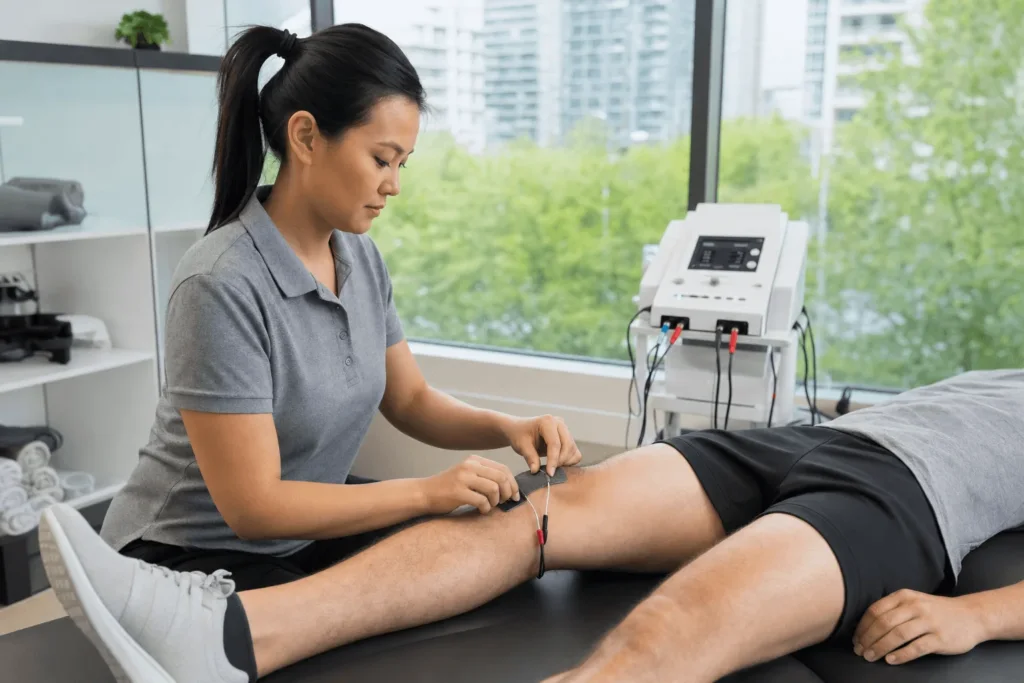
Electrotherapy is a physiotherapy treatment that uses controlled electrical currents to reduce pain, promote healing, and improve muscle function. If you’re dealing with chronic pain, recovering from an injury, or managing inflammation, you’ve likely heard about electrotherapy as a non-invasive treatment option. This guide explains what electrotherapy is, how it works, which conditions it treats, and what to expect during treatment.
We’ll cover the science behind electrical stimulation therapy, compare different modalities like TENS and EMS, and help you understand whether this treatment is right for your specific condition.
Quick Answer
Electrotherapy uses low-voltage electrical currents to relieve pain, reduce inflammation, stimulate muscles, and accelerate tissue healing. It’s a non-invasive physiotherapy technique commonly used for chronic pain, sports injuries, and post-surgical recovery.
What Is Electrotherapy? Definition and Overview
Electrotherapy is a medical treatment that applies electrical energy to the body for therapeutic purposes. It’s been used in physiotherapy for decades to manage pain, improve circulation, and restore muscle function.
The treatment involves placing electrodes on your skin near the injured or painful area. These electrodes deliver controlled electrical pulses that interact with your nervous system and muscles. The intensity, frequency, and duration vary depending on the specific condition being treated.
At ProMed Wellness Centre in North York, our physiotherapy team uses electrotherapy as part of comprehensive treatment plans that may also include manual therapy, therapeutic exercise, and other modalities.
Key Takeaways
- Understand electrotherapy uses electrical currents to manage pain and promote healing.
- Choose from TENS, EMS, and IFC based on your specific condition.
- Expect mild tingling sensations during treatment, not painful shocks or discomfort.
- Plan for multiple sessions over several weeks for optimal therapeutic results.
- Verify your insurance coverage before treatment as most Ontario plans cover it.
- Avoid electrotherapy if you have a pacemaker or are pregnant without clearance.
How Does Electrotherapy Work? Mechanisms and Science
Electrotherapy works through several mechanisms. The most widely accepted explanation for pain relief is the gate control theory of pain.
According to this theory, electrical stimulation activates large nerve fibers that carry non-painful signals. These signals reach your spinal cord faster than pain signals traveling through smaller nerve fibers. The non-painful signals essentially close the gate to pain transmission, preventing pain messages from reaching your brain.
Beyond pain modulation, electrotherapy stimulates muscle contractions. When electrical current reaches muscle tissue, it causes muscle fibers to contract and relax rhythmically. This mimics natural muscle activity and helps prevent atrophy during periods of immobilization. Some forms also promote tissue healing by increasing local blood flow, bringing more oxygen and nutrients to damaged tissues while removing metabolic waste products.
Types of Electrotherapy: Modalities and Devices
Several electrotherapy modalities exist, each with specific applications. TENS (Transcutaneous Electrical Nerve Stimulation) is primarily used for pain relief. It delivers low-frequency electrical pulses through electrodes placed on the skin. Lower frequencies (2-10 Hz) may stimulate endorphin release, while higher frequencies (80-150 Hz) work through the gate control mechanism.
EMS (Electrical Muscle Stimulation) targets muscle tissue directly. It’s used to strengthen weakened muscles, prevent atrophy, and reduce muscle spasms. Unlike TENS, which focuses on pain relief, EMS produces visible muscle contractions.
Interferential current therapy (IFC) uses two medium-frequency currents that intersect beneath your skin. This creates deeper penetration than standard TENS, making it effective for deep tissue pain and inflammation. IFC is particularly useful for conditions affecting deeper structures like hip joints or the lumbar spine. Therapeutic ultrasound uses electrical energy to generate sound waves that create heat in deep tissues, promoting healing and reducing inflammation.
We often start with lower intensity settings during your first session to gauge your tolerance. Most patients find the sensation pleasant once they adjust to it, describing it as a gentle buzzing or massage-like feeling.
What Conditions Can Electrotherapy Treat?
Electrotherapy effectively treats a wide range of acute and chronic conditions. Common conditions that respond well include:
- Chronic back pain and sciatica
- Osteoarthritis and rheumatoid arthritis
- Sports injuries including muscle strains and ligament sprains
- Post-surgical pain and swelling
- Tendonitis and bursitis
- Muscle spasms and tension
- Frozen shoulder and rotator cuff injuries
- Carpal tunnel syndrome
- Plantar fasciitis
- Fibromyalgia
Research shows electrotherapy is particularly effective for neuropathic pain conditions where nerve damage causes persistent discomfort. It’s also valuable during post-operative rehabilitation when patients need pain management without relying solely on medication.
Ready to start your recovery?
Our multidisciplinary team in North York offers physiotherapy, chiropractic, massage therapy, and more under one roof. Direct billing available, no referral needed.
Benefits of Electrotherapy for Pain Relief and Recovery
Electrotherapy offers several advantages over other pain management approaches. It’s non-invasive, has minimal side effects, and can be used alongside other treatments.
One major benefit is reduced reliance on pain medication. For patients dealing with chronic pain, electrotherapy provides an alternative to long-term pharmaceutical use. This is particularly important given concerns about opioid dependence and the side effects of NSAIDs.
The treatment accelerates recovery by improving circulation and promoting tissue healing. Better blood flow means faster removal of inflammatory byproducts and quicker delivery of healing nutrients to damaged tissues. For muscle-related issues, electrotherapy prevents atrophy during recovery. When injury or surgery limits normal movement, EMS maintains muscle activation and strength.
Safety, Contraindications, and Side Effects
Electrotherapy is generally safe when administered by trained professionals. However, certain conditions make the treatment inappropriate or require special precautions.
Absolute contraindications include cardiac pacemakers or other implanted electrical devices, pregnancy (especially electrode placement over the abdomen or pelvis), epilepsy (when electrodes are placed near the head or neck), active cancer or tumors in the treatment area, and thrombophlebitis or deep vein thrombosis.
Relative contraindications include areas of impaired sensation or numbness, open wounds or skin conditions in the treatment area, metal implants near the treatment site, recent hemorrhage or bleeding disorders, and active infections.
Side effects are rare but can include skin irritation from the electrodes, especially with prolonged use. Some patients experience muscle soreness after EMS treatment, similar to the feeling after a workout. This typically resolves within 24-48 hours. At our physiotherapy clinic, we conduct thorough assessments before starting any electrotherapy treatment to identify potential contraindications and ensure your safety.
What to Expect During an Electrotherapy Session
Most first-time patients are surprised by how comfortable the experience is. Your physiotherapist will begin by cleaning the treatment area and applying electrodes to your skin using adhesive pads or gel. The electrode placement depends on your specific condition and treatment goals.
The sensation during electrotherapy varies based on the modality and intensity settings. TENS typically produces a tingling or buzzing feeling. Some patients describe it as gentle pins and needles. EMS creates actual muscle contractions. You’ll feel your muscle tighten and release rhythmically. This shouldn’t be painful, though the sensation takes some getting used to. The intensity is gradually increased until you feel a strong but comfortable muscle contraction.
Interferential current therapy feels similar to TENS but may produce a deeper sensation. Some patients report a slight warmth in the treatment area. None of these sensations should be painful. If you experience sharp pain, burning, or significant discomfort, tell your physiotherapist immediately so they can adjust the settings.
Most electrotherapy sessions last 15-30 minutes. Your physiotherapist will monitor your response and adjust parameters as needed. You can read, use your phone, or simply relax during treatment. After the session, electrodes are removed and your skin is cleaned. Some patients notice immediate pain relief, while others experience gradual improvement over multiple sessions.
Treatment frequency typically ranges from 2-3 times per week initially, tapering to once weekly as you improve. Acute conditions may require daily treatment for the first week, while chronic conditions often respond to less frequent sessions.
Preparing for Your First Electrotherapy Appointment
Proper preparation ensures your first treatment session goes smoothly and provides maximum benefit. Wear loose-fitting garments that can be easily rolled up or removed to expose the treatment area. For lower back treatment, wear pants with an elastic waistband. For shoulder issues, wear a tank top or loose shirt. Shower before your appointment if possible for clean skin and avoid applying lotions, oils, or creams to the treatment area.
Bring your health insurance card and policy number, list of all current medications and supplements, previous imaging reports (X-rays, MRI, ultrasound), and any questions you want to ask your physiotherapist. Communicate when your pain started and what triggered it, what makes your symptoms better or worse, previous treatments you’ve tried and their effectiveness, any medical devices you use (pacemakers, pumps), and whether you’re pregnant or could be pregnant.
Arrive 10-15 minutes early for first-time paperwork. We offer direct billing at ProMed Wellness Centre to most major insurance providers, making the payment process convenient.
Insurance Coverage and Costs in Ontario
Understanding the financial aspects of electrotherapy helps you plan your treatment without unexpected costs. In Ontario, OHIP does not cover physiotherapy services for most adults. However, the majority of private insurance plans include physiotherapy coverage, and electrotherapy is typically covered as part of your physiotherapy benefit.
Extended health plans commonly cover 80-100% of treatment costs up to an annual maximum. This maximum typically ranges from $300 to $1,500 per year, depending on your specific plan. Some plans limit the number of visits rather than imposing a dollar maximum. Common limits range from 10 to 30 visits per calendar year.
If you don’t have insurance coverage, expect to pay between $60 and $120 per session in the Toronto area. Initial assessments typically cost more than follow-up treatments. At ProMed Wellness Centre, we offer direct billing to most major insurance providers. This means you only pay your copayment or deductible at the time of service rather than paying upfront and waiting for reimbursement.
Workers’ compensation (WSIB) covers physiotherapy including electrotherapy for work-related injuries. Motor vehicle accident claims through auto insurance typically include full coverage for medically necessary physiotherapy treatments. Some employer health spending accounts (HSAs) or wellness spending accounts also cover electrotherapy. Electrotherapy costs may be tax-deductible as medical expenses if you’re paying out of pocket. Keep your receipts and consult with a tax professional about claiming these expenses on your return.
Electrotherapy vs Manual Therapy: Choosing the Right Approach
Many patients wonder whether they should choose electrotherapy or manual therapy for their condition. Understanding the strengths of each approach helps you make informed decisions about your treatment plan.
Electrotherapy excels at immediate pain relief and muscle stimulation. It’s particularly useful when pain levels are too high for hands-on treatment or when muscle activation is difficult. The electrical stimulation can reduce pain enough to make manual therapy more tolerable and effective.
Manual therapy addresses mechanical dysfunctions, joint restrictions, and soft tissue adhesions that electrotherapy cannot resolve. Techniques like joint mobilization, soft tissue release, and myofascial work require skilled hands-on intervention to restore normal movement patterns.
| Treatment Feature | Electrotherapy | Manual Therapy |
|---|---|---|
| Best for | Immediate pain relief, muscle stimulation, reducing inflammation | Joint restrictions, tissue adhesions, mechanical dysfunctions |
| Ideal conditions | Acute pain, muscle atrophy, nerve pain, post-surgical recovery | Stiffness, mobility limitations, chronic tension, alignment issues |
| Treatment approach | Device-assisted, standardized electrical parameters | Hands-on, customized based on tissue response |
| Session duration | 15-30 minutes | 20-45 minutes |
| Home use option | Yes (portable TENS units available) | Limited (self-massage only) |
| Best suited for | Patients with high pain sensitivity, early-stage recovery, difficulty activating muscles | Patients with joint stiffness, movement restrictions, postural problems |
When to choose electrotherapy: Select electrotherapy as your primary treatment when you’re experiencing severe acute pain that limits tolerance for hands-on techniques, need muscle re-education after surgery or prolonged immobilization, have nerve-related pain conditions like sciatica or neuropathy, require pain management without medication, or are in the early inflammatory phase of injury when manual therapy may be too aggressive.
When to choose manual therapy: Opt for manual therapy when you have significant joint stiffness or restricted range of motion, experience chronic muscle tension that doesn’t respond to electrical stimulation alone, need treatment for postural dysfunctions or alignment issues, have adhesions or scar tissue limiting movement, or require mobilization of specific joints or soft tissue structures.
When to combine both approaches: Most patients benefit from integrated treatment. Use electrotherapy to manage pain and prepare tissues in the first 5-10 minutes, then apply manual therapy to address underlying mechanical issues. This combination reduces discomfort during hands-on treatment while addressing root causes. Follow with therapeutic exercises to maintain improvements and prevent recurrence.
Your condition, pain levels, and treatment goals determine the optimal mix. Our team in North York customizes treatment plans based on your individual presentation rather than following a one-size-fits-all protocol. Many patients benefit from starting treatment with more electrotherapy during acute phases, then transitioning to more manual therapy as their tolerance improves.
Frequently Asked Questions
What is electrotherapy and how does it work?
Electrotherapy is a physiotherapy treatment that uses controlled electrical currents to reduce pain, stimulate muscles, and promote tissue healing. It works by stimulating nerve fibers that block pain signals from reaching your brain (gate control theory), improving circulation, and causing therapeutic muscle contractions. Different types target specific conditions through varying frequencies and intensities.
Is electrotherapy painful or safe to use?
Electrotherapy is not painful when properly administered. Most patients describe sensations ranging from mild tingling to gentle muscle contractions, similar to a massage feeling. The treatment is very safe when performed by trained physiotherapists and when contraindications like pacemakers or pregnancy are properly screened. Side effects are rare and typically limited to minor skin irritation.
What conditions can electrotherapy effectively treat?
Electrotherapy effectively treats chronic back pain, arthritis, sports injuries, post-surgical pain, tendonitis, muscle spasms, frozen shoulder, carpal tunnel syndrome, plantar fasciitis, and fibromyalgia. It’s particularly useful for neuropathic pain conditions and situations where muscle activation is difficult due to pain or surgery. The treatment works best when combined with other physiotherapy approaches.
How long does an electrotherapy session take and how many will I need?
Most electrotherapy sessions last 15-30 minutes. Treatment frequency typically starts at 2-3 times per week, gradually decreasing as you improve. Acute injuries often respond within 4-6 sessions over 2-3 weeks, while chronic conditions may require 8-12 sessions over 4-8 weeks. Your physiotherapist will reassess your progress every 2-3 sessions and adjust the treatment plan accordingly.
Is electrotherapy covered by insurance in Ontario?
Most private extended health insurance plans in Ontario cover electrotherapy as part of physiotherapy benefits, typically covering 80-100% of costs up to an annual maximum. OHIP does not cover physiotherapy for most adults, but WSIB covers work-related injuries and auto insurance covers motor vehicle accident claims. Many clinics including ProMed Wellness Centre offer direct billing to simplify the payment process.
Taking the Next Step Toward Pain Relief
Electrotherapy offers a proven, non-invasive approach to managing pain and accelerating recovery. Whether you’re dealing with chronic discomfort, recovering from injury, or seeking alternatives to medication, this treatment can play a valuable role in your rehabilitation. The key is working with experienced professionals who can assess your specific condition and integrate electrotherapy into a comprehensive treatment plan.
Our team at ProMed Wellness Centre in North York combines electrotherapy with manual therapy, therapeutic exercise, and other evidence-based treatments to help you achieve lasting results. We offer direct billing, no referral is needed, and our multilingual staff serves patients throughout the Toronto area. Schedule your initial assessment to discover how electrotherapy can support your recovery journey.