
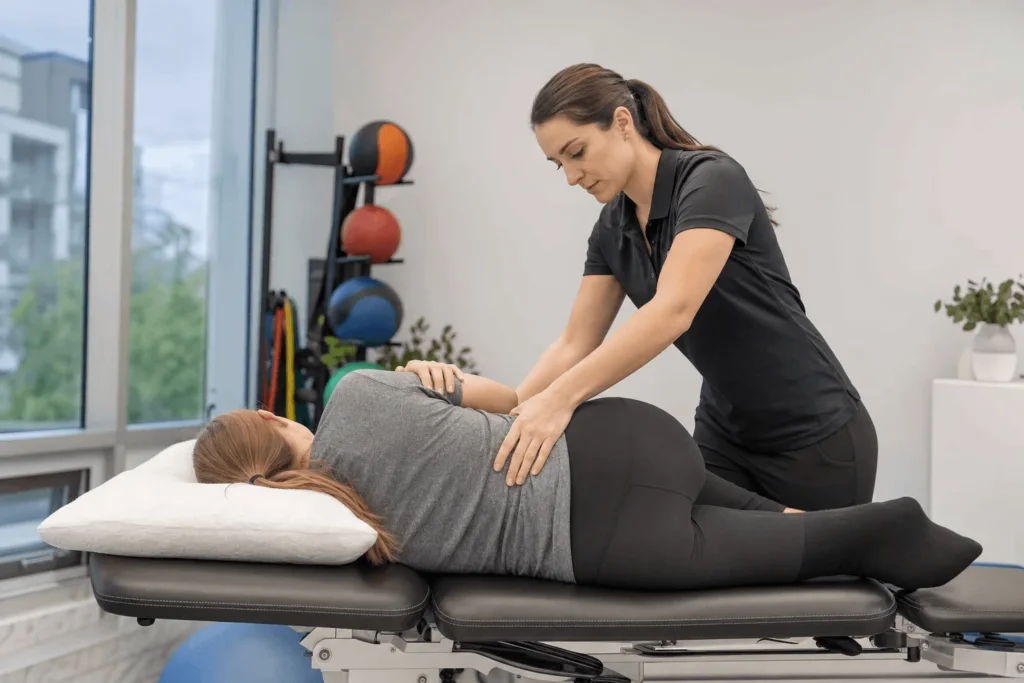
Physiotherapy for lower back pain combines targeted exercises, hands-on manual therapy, and education to address the root causes of your pain while building long-term resilience. If you’re dealing with persistent lower back discomfort in North York or anywhere in the Greater Toronto Area, understanding what physiotherapy can realistically achieve and how quickly you’ll see results makes all the difference in your recovery journey.
This guide covers evidence-based physiotherapy treatments that actually work, realistic recovery timelines, specific exercises proven to relieve lower back pain, and when to seek immediate medical attention. We’ll walk through what to expect during treatment at a multidisciplinary clinic like ProMed Wellness Centre in North York, where physiotherapy often works alongside chiropractic care, massage therapy, and osteopathy to address complex back pain presentations.
Quick Answer
Physiotherapy effectively treats lower back pain through core strengthening exercises, manual therapy techniques, and movement education. Most patients see meaningful improvement within 4-6 weeks when following a structured treatment plan that combines hands-on therapy with progressive exercise rehabilitation.
Understanding Lower Back Pain: Common Causes and Types
Lower back pain affects the lumbar spine, specifically the five vertebrae between your ribcage and pelvis (L1-L5) plus the sacrum. The lumbar region bears most of your body weight and handles rotational forces during daily activities.
Most lower back pain falls into two categories: specific and non-specific. Specific back pain has an identifiable structural cause like a herniated disc at L4-L5 or L5-S1, degenerative disc disease, or spinal stenosis. Non-specific low back pain, which accounts for roughly 85% of cases, lacks a clear structural diagnosis but responds well to physiotherapy.
Common triggers include prolonged sitting with poor posture, sudden lifting with improper mechanics, weak core muscles that fail to stabilize the lumbar spine, and tight hip flexors that alter pelvic alignment. Repetitive bending, twisting under load, or maintaining awkward positions at work gradually stress the soft tissues supporting your spine.
The pain pattern matters. Axial back pain stays in the lumbar region without radiating down your legs. Radicular pain shoots into your buttock, thigh, or foot, following specific nerve pathways that suggest nerve root compression. Sciatica involves pain radiating along the sciatic nerve distribution, often accompanied by numbness or tingling.
Acute back pain lasts less than six weeks and typically resolves with conservative treatment. Chronic lower back pain persists beyond 12 weeks and requires a more comprehensive rehabilitation approach addressing movement patterns, muscle imbalances, and psychological factors that perpetuate pain.
Key Takeaways
- Expect meaningful pain reduction within 4-6 weeks of structured physiotherapy treatment.
- Choose exercises targeting core stabilization over passive treatments for lasting results.
- Combine manual therapy with active rehabilitation for faster recovery timelines.
- Recognize red flag symptoms requiring immediate medical assessment beyond physiotherapy.
- Maintain prevention exercises long-term to avoid recurrence after initial recovery.
How Physiotherapy Actually Helps Lower Back Pain (The Evidence)
Physiotherapy works through three interconnected mechanisms: reducing pain and inflammation, restoring normal movement patterns, and building structural resilience to prevent recurrence. The evidence supporting physiotherapy for lower back pain treatment is substantial and consistent across multiple research studies.
Manual therapy techniques like spinal mobilization temporarily reduce pain by stimulating mechanoreceptors that modulate pain signals at the spinal cord level. This neurological effect, called gate control theory, explains why hands-on treatment provides immediate relief even before tissue healing occurs.
Exercise therapy addresses the underlying mechanical dysfunction. Core strengthening for back pain specifically targets the deep stabilizing muscles (transverse abdominis, multifidus, pelvic floor) that control spinal position during movement. When these muscles function properly, they reduce excessive strain on passive structures like discs and ligaments.
Research shows that active treatment approaches outperform passive interventions for long-term outcomes. At ProMed Wellness Centre, our multidisciplinary approach means physiotherapists can coordinate care with chiropractors when spinal manipulation might complement exercise therapy, or refer to massage therapy when excessive muscle guarding limits movement.
The education component cannot be overstated. Understanding pain neuroscience, learning proper body mechanics, and recognizing the difference between hurt and harm empowers you to stay active during recovery. Fear-avoidance behavior, where patients restrict movement to avoid pain, often prolongs disability more than the original injury.
Start core exercises before your pain completely resolves. Our North York team finds patients who begin gentle stabilization work at 60-70% pain reduction maintain gains better than those who wait until symptom-free, which often delays strengthening past the optimal neuroplasticity window.
Physiotherapy Exercises That Work for Lower Back Pain Relief
Effective physiotherapy exercises for lower back pain follow a progression from gentle mobility work to loaded strengthening. The specific exercises your physiotherapist prescribes depend on your pain presentation, movement limitations, and functional goals.
Core Strengthening and Spinal Stabilization Exercises
Core stabilization forms the foundation of back pain rehabilitation. These exercises teach your deep trunk muscles to activate before movement occurs, protecting the lumbar spine from excessive motion.
The dead bug exercise isolates core control while minimizing spinal load. Lying on your back with knees bent and arms extended toward the ceiling, you slowly lower opposite arm and leg while maintaining neutral spine position. This challenges rotational stability without compression forces.
Bird dog progressions build on this pattern in a hands-and-knees position. Extending opposite arm and leg while keeping your lower back still trains the multifidus and transverse abdominis to resist extension and rotation simultaneously.
Planks and side planks develop global core endurance. Start with modified versions on your knees if needed, focusing on maintaining neutral spine alignment rather than duration. Quality trumps quantity. Holding perfect form for 20 seconds beats holding 60 seconds with a sagging lower back.
The McGill big three (curl-up, side plank, bird dog) represents an evidence-based core program developed specifically for spine stability. These exercises create co-contraction of anterior and posterior trunk muscles without repeated spinal flexion that could aggravate disc issues.
Essential Stretches for Hip Flexors, Glutes, and Lower Back
Tight hip flexors alter pelvic tilt and increase lumbar lordosis, placing excessive strain on the posterior elements of your spine. The kneeling hip flexor stretch targets the iliopsoas, the primary hip flexor connecting your lumbar vertebrae to your femur.
Gluteal muscle stretching addresses the piriformis and deep hip rotators that can contribute to sciatic nerve irritation. The figure-four stretch, performed lying on your back with one ankle crossed over the opposite knee, provides controlled tension through these deep muscles.
Cat-cow movements gently mobilize the entire spine through flexion and extension, improving segmental mobility that often becomes restricted with chronic pain. This rhythmic movement also promotes fluid exchange in spinal discs.
The child’s pose stretch combines gentle spinal flexion with hip flexion, decompressing the lumbar spine while stretching the erector spinae muscles. This position often provides immediate relief for extension-sensitive back pain.
McKenzie Method exercises use repeated movements in specific directions to centralize pain and reduce radiating symptoms. Extension-based McKenzie exercises work well for disc-related pain with leg symptoms, while flexion-based movements suit stenosis presentations.
Ready to start your recovery?
Our multidisciplinary team in North York offers physiotherapy, chiropractic, massage therapy, and more under one roof. Direct billing available, no referral needed.
Manual Therapy and Hands-On Treatment Techniques
Manual therapy for lumbar spine pain includes joint mobilization, soft tissue techniques, and neural mobilization. These hands-on approaches complement exercise therapy by reducing pain and restoring mobility that allows better exercise performance.
Spinal mobilization applies graded pressure to specific vertebral segments to restore normal joint mechanics. Grade I and II mobilizations use gentle oscillations primarily for pain relief through neurological mechanisms. Grade III and IV mobilizations stretch joint capsules and break up adhesions to restore range of motion.
Soft tissue mobilization addresses muscle tension and fascial restrictions that limit movement and contribute to pain. Trigger point release targets hyperirritable spots in taut muscle bands that refer pain to distant areas. The quadratus lumborum, a common trigger point source in lower back pain, often refers pain to the hip and buttock region.
Myofascial release techniques apply sustained pressure to fascial restrictions, allowing the viscoelastic tissue to gradually lengthen. Neural mobilization, sometimes called nerve flossing, gently tensions and releases peripheral nerves to reduce mechanosensitivity and improve nerve gliding through surrounding tissues.
Our physiotherapy team coordinates with massage therapy treatments when extensive soft tissue work beyond the physiotherapy session time would benefit recovery. Joint manipulation can be incorporated when appropriate, or we coordinate with our chiropractic colleagues when this approach fits your presentation.
Your Treatment Timeline: What to Expect Week by Week
Understanding realistic recovery milestones helps you track progress and maintain motivation during rehabilitation. The physiotherapy treatment timeline for lower back pain follows predictable patterns, though individual variation exists based on pain chronicity, severity, and adherence.
| Timeline | Treatment Focus | Expected Progress |
|---|---|---|
| Week 1-2 | Pain management, gentle mobility | 30-40% pain reduction, improved sitting tolerance |
| Week 3-4 | Core activation, range of motion | 50-60% pain reduction, return to light activities |
| Week 5-8 | Progressive strengthening, functional training | 70-80% improvement, return to most normal activities |
| Week 9-12 | Advanced strengthening, activity-specific training | 80-90% improvement, full activity return with precautions |
The first two weeks prioritize pain control and preventing deconditioning. You’ll attend physiotherapy 2-3 times weekly during this acute phase. Manual therapy reduces pain intensity and muscle guarding that limits movement. Gentle range of motion exercises prevent stiffness without aggravating inflammation. Walking for 10-15 minutes several times daily maintains cardiovascular fitness and promotes healing through increased blood flow. By week 2, you should achieve 30-40% overall improvement with noticeably better sitting and standing tolerance.
Weeks three and four introduce controlled core strengthening while continuing pain management. You begin basic stabilization exercises like dead bugs and modified planks, focusing on proper muscle activation patterns rather than intensity. Treatment frequency may remain at 2 times weekly as your physiotherapist monitors exercise form and progression. Most patients return to light activities and achieve 50-60% improvement during this phase.
Mid-phase rehabilitation (weeks 5-8) emphasizes progressive loading and functional restoration. Treatment frequency typically reduces to once weekly as home exercise assumes greater importance. Core strengthening intensifies with added resistance, longer holds, and more challenging variations. Functional exercises mimic real-world demands like squat patterns for lifting, lunges with rotation for yard work, and step-ups with overhead reaches. This phase includes graduated return to restricted activities with progressive weight limits for lifting. Expect 70-80% improvement by week 8.
The final rehabilitation phase (weeks 9-12) focuses on advanced strengthening and preparing you for long-term independence. Exercise difficulty increases significantly with deadlift patterns using moderate weights, single-leg exercises challenging balance and stability, and rotational movements preparing you for sports or physically demanding work. Activity-specific training dominates this phase with sport-specific or job-specific movement practice. Your physiotherapist develops a long-term maintenance program, typically consisting of 3-4 core exercises performed 2-3 times weekly to maintain strength gains and prevent recurrence.
Activity-Specific Modifications During Recovery
Returning to normal activities requires strategic modifications that protect your healing spine while preventing the deconditioning that prolongs disability. These practical adjustments apply to common daily scenarios that patients frequently ask about during treatment.
Desk Work and Prolonged Sitting Setup
Set up your workstation with your monitor at eye level and your chair supporting your lumbar curve with a small roll or towel if built-in support is inadequate. Position your keyboard and mouse close enough to avoid reaching forward, which rounds your lower back. Stand and walk for 2-3 minutes every 30 minutes to interrupt prolonged static loading. During weeks 1-4, limit continuous sitting to 30-45 minutes. By weeks 5-8, gradually increase to 60-90 minutes between breaks. After week 8, most patients tolerate 2-hour blocks, though regular movement breaks remain beneficial long-term.
Proper Lifting Technique for Children and Heavy Objects
Always assess weight before lifting by tilting the object. Bend at your hips and knees while keeping the load close to your body’s center of gravity, never reaching forward with straight legs. Engage your core before the lift by gently drawing your navel toward your spine. Avoid twisting while holding weight by pivoting your feet to turn your entire body as one unit. When lifting a child from a crib or car seat, lower the side rail or move closer to minimize reaching distance. During weeks 1-4, limit lifting to 10-15 pounds. Weeks 5-8 allow progression to 20-30 pounds with proper form. After week 8, gradually increase loads as strength improves.
Car Entry and Exit Strategy
Sit down first with your back to the seat, then swing both legs in together while keeping your knees together. This eliminates the combined flexion and rotation that stresses the lumbar spine. Reverse the process when exiting by swinging both legs out before standing. Adjust your seat more upright than normal during acute phases to reduce hip flexion. For long drives during recovery, stop every 45-60 minutes to walk and perform gentle back extensions.
Optimal Sleep Positions and Bed Transitions
Side sleeping with a pillow between your knees maintains neutral spine alignment and reduces stress on your hips and lower back. Choose a pillow height that keeps your head aligned with your spine. Back sleeping works well with a pillow under your knees to reduce lumbar lordosis. Stomach sleeping typically aggravates lower back pain through excessive extension and should be avoided during recovery. When getting out of bed, roll to your side, then push yourself up with your arms while swinging your legs off the bed, avoiding sit-up motions that load the spine.
Red Flags: When Lower Back Pain Needs Immediate Medical Attention
Most lower back pain responds well to physiotherapy, but certain symptoms indicate serious pathology requiring immediate medical evaluation. Recognizing these red flags prevents delayed diagnosis of conditions beyond physiotherapy’s scope.
| Red Flag Symptom | Possible Condition | Action Required |
|---|---|---|
| Loss of bladder/bowel control, saddle numbness | Cauda equina syndrome | Emergency department immediately |
| Progressive leg weakness, foot drop | Severe nerve compression | Medical evaluation within 24-48 hours |
| Fever, chills, unexplained weight loss | Infection or malignancy | Doctor appointment within 1-2 days |
| Severe pain after trauma/fall | Fracture | Medical imaging before treatment |
| Night pain that worsens when lying down | Inflammatory condition or tumor | Medical evaluation within 1 week |
Cauda equina syndrome represents a surgical emergency. Symptoms include severe lower back pain combined with saddle anesthesia (numbness in the groin and inner thighs), loss of bladder or bowel control, progressive leg weakness, and sexual dysfunction. This condition requires emergency department evaluation within hours to prevent permanent nerve damage.
Progressive neurological deficits, including increasing leg weakness, foot drop, or expanding areas of numbness, indicate worsening nerve compression that may require surgical intervention. While some nerve symptoms improve with conservative care, progressive deterioration demands medical imaging and specialist consultation within 24-48 hours.
Unexplained weight loss, fever, or night sweats alongside back pain suggest possible infection or malignancy. Back pain that worsens when lying down rather than improving with rest also raises concern for serious pathology. History of cancer, especially breast, prostate, lung, kidney, or thyroid cancer, increases the risk of spinal metastases and warrants imaging even without other red flag symptoms.
Severe trauma, such as a fall from height or motor vehicle accident, necessitates imaging to rule out fractures before beginning manual therapy or exercise. Patients over 50 with new-onset back pain and a history of osteoporosis should be screened for compression fractures. Unremitting pain unaffected by position changes or rest may indicate inflammatory conditions like ankylosing spondylitis.
During initial assessments at our North York clinic, we screen for these red flags systematically. If concerning features are present, we coordinate appropriate medical referrals before starting treatment or refer you to emergency services if the situation demands immediate attention. If you’re experiencing radiating leg pain that might indicate sciatica, our article on physiotherapy for sciatica provides detailed information on that specific presentation.
Preventing Lower Back Pain From Coming Back
Recurrence rates for lower back pain range from 40-70% within one year without proper prevention strategies. Long-term success requires converting rehabilitation exercises into permanent movement habits and addressing lifestyle factors that contributed to the initial episode.
Maintain Your Core Strength Long-Term
Perform your core stabilization exercises 3-4 times weekly indefinitely. These sessions take only 10-15 minutes but provide the muscular support that protects your spine during unexpected movements or prolonged stress. Your maintenance program should include at least one exercise from each category: anti-extension (plank), anti-rotation (dead bug or pallof press), and anti-lateral flexion (side plank). Progression remains important even after formal treatment ends by gradually increasing difficulty through added resistance, longer hold times, or more challenging variations.
Practice Proper Body Mechanics Daily
Proper lifting technique must become automatic. Always assess load before lifting by testing the weight. Keep the load close to your body’s center of gravity. Engage your core before initiating the lift. Use your leg muscles to generate force rather than pulling with your back. Avoid twisting while holding weight by pivoting your feet instead. Apply these principles to all lifting scenarios, not just heavy objects. Repetitive lifting of light objects with poor form causes as many back injuries as occasional heavy lifts.
Optimize Your Work Environment
Workplace ergonomics require ongoing attention. If you sit for work, use a chair with proper lumbar support or add a cushion that maintains your spine’s natural curves. Position your computer monitor directly in front of you at arm’s length, with the top of the screen at or slightly below eye level. Regular movement breaks interrupt the sustained postures that gradually load spinal tissues toward their failure threshold. Stand and perform 5-10 gentle spinal extensions every 30-45 minutes during desk work.
Address Lifestyle Factors
Maintain healthy body weight to reduce compressive loads on your lumbar spine. Each pound of excess body weight adds approximately four pounds of pressure to your lower back during standing and walking activities. Stay physically active with exercises that promote spinal health like swimming, walking, yoga, or Pilates when performed with proper instruction. Address stress and sleep quality, as chronic stress increases muscle tension and pain sensitivity while poor sleep impairs tissue healing and reduces pain tolerance.
Schedule Preventive Check-Ins
Schedule periodic check-ins with your physiotherapist, even after symptoms resolve. Quarterly or biannual sessions allow correction of movement pattern deterioration before pain recurs. These maintenance visits also provide exercise progression as your fitness level changes. Return to physiotherapy at the first sign of symptom recurrence rather than waiting for pain to become severe. Early intervention for minor flare-ups typically requires only 1-3 sessions compared to 8-12 weeks for fully developed episodes.
Create a flare-up protocol with your physiotherapist before discharge. This written plan outlines specific exercises and modifications to implement at the first sign of increased symptoms, empowering you to manage minor setbacks independently and recognize when professional reassessment is necessary.
Frequently Asked Questions
Does physiotherapy actually help lower back pain?
Yes, physiotherapy effectively treats lower back pain through manual therapy, targeted exercises, and patient education. Research shows that active physiotherapy approaches, particularly core strengthening and movement retraining, provide superior long-term outcomes compared to passive treatments alone. Most patients experience 50-70% pain reduction within 4-6 weeks when following a structured program.
What are the best exercises for lower back pain relief?
The most effective exercises target core stabilization and hip mobility. Dead bugs, bird dogs, and planks strengthen deep stabilizing muscles without excessive spinal loading. Hip flexor stretches and glute strengthening address muscle imbalances that alter spinal mechanics. McKenzie extension exercises work well for disc-related pain with leg symptoms. The best exercise prescription depends on your specific pain pattern, which is why assessment by a physiotherapist ensures you’re performing movements that help rather than aggravate your condition.
How long does physiotherapy take to work for lower back pain?
Most patients notice meaningful improvement within 2-4 weeks of starting physiotherapy, with significant functional gains by 6-8 weeks. Acute back pain (less than 6 weeks duration) typically responds faster than chronic presentations. Treatment frequency starts at 2-3 sessions weekly during the first 2-3 weeks, then reduces to weekly sessions as you progress. Complete rehabilitation usually takes 8-12 weeks.
Is rest or movement better for lower back pain?
Movement is superior to rest for most lower back pain. While 1-2 days of relative rest might be necessary during severe acute pain, prolonged bed rest delays recovery and increases the risk of chronic disability. Gentle movement maintains muscle function, promotes healing through increased blood flow, and prevents the fear-avoidance patterns that prolong pain. Walking, gentle stretching, and modified daily activities keep you functional without aggravating injury.
How do I know if my lower back pain is serious enough to see a doctor?
Seek immediate medical attention if you experience loss of bladder or bowel control, saddle numbness in your groin or inner thighs, progressive leg weakness, or severe pain following trauma. Consult a doctor within 1-2 days for unexplained weight loss with back pain, fever or chills, pain that worsens at night, or a history of cancer. Most mechanical lower back pain improves with physiotherapy and doesn’t require imaging or specialist referral.
Lower back pain disrupts your daily life, but understanding what physiotherapy actually offers changes the recovery equation. The combination of hands-on manual therapy, progressive strengthening exercises, and practical education creates lasting results that go beyond temporary pain relief.
The evidence is clear: active rehabilitation targeting core stability and movement patterns outperforms passive approaches for long-term success. Realistic expectations about timeline, commitment to home exercises, and early intervention when symptoms first appear all contribute to faster, more complete recovery.
At ProMed Wellness Centre, our team takes a comprehensive approach to lower back pain, combining physiotherapy with coordinated access to chiropractic, massage therapy, osteopathy, and other services when your presentation requires multidisciplinary care. Located at 2001B Finch Ave West in North York, we offer direct billing, multilingual staff, and no-referral-needed access to get you started quickly.
Don’t let lower back pain become chronic while you wait for it to resolve on its own. Early physiotherapy intervention prevents acute episodes from developing into long-term disability. Book an initial assessment with our physiotherapy team, or call (647) 349-8765 to discuss your specific situation and determine the right treatment approach for your recovery.