
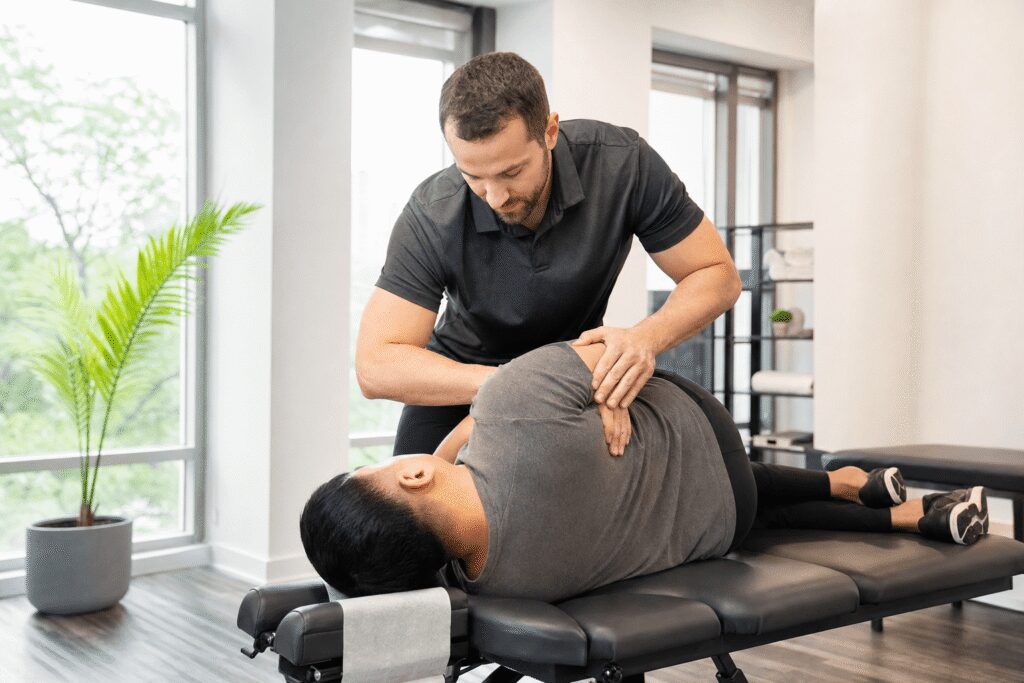
Osteopathy is a hands-on manual therapy that treats musculoskeletal pain and dysfunction by addressing the root cause of symptoms rather than just masking them. If you’re dealing with chronic back pain, sports injuries, or limited mobility, understanding what osteopathy is and how it differs from other treatments can help you make an informed decision about your care. This guide explains the core principles of osteopathic manual treatment, the techniques practitioners use, what conditions respond well to this approach, and how to know if osteopathy is right for your specific health needs.
Quick Answer
Osteopathy is a holistic manual therapy that treats pain and dysfunction by manipulating the musculoskeletal system. Practitioners use hands-on techniques like soft tissue manipulation, joint mobilization, and myofascial release to restore balance and improve the body’s natural healing capacity.
What Is Osteopathy? Definition and Core Principles
Osteopathy is a patient-centered manual therapy that focuses on the interconnection between your body’s structure and function. Unlike treatments that target isolated symptoms, osteopathy looks at how different body systems work together to identify what’s causing your pain or restricted movement.
The practice is built on the idea that your body has an innate ability to heal itself when structural balance is restored. Manual osteopaths use precise hands-on techniques to release tension, improve circulation, and enhance mobility throughout the musculoskeletal system.
At its core, osteopathy treats the whole person rather than just the injury site. If you come in with shoulder pain, an osteopath might examine your neck, upper back, and even your ribcage to understand what’s contributing to the problem.
The History of Osteopathy: Andrew Taylor Still’s Vision
Andrew Taylor Still founded osteopathy in 1874 after becoming disillusioned with conventional medicine’s limitations. He developed a system based on understanding anatomy, physiology, and the body’s mechanical relationships.
Still believed that many health problems stemmed from structural imbalances affecting blood flow and nerve function. His philosophy emphasized the body’s self-regulating mechanisms and the importance of maintaining proper alignment for optimal health.
Today’s osteopathic practice has evolved considerably from Still’s original methods, incorporating modern biomechanical research and clinical evidence. Manual osteopaths in Ontario complete rigorous training programs focused specifically on musculoskeletal assessment and hands-on treatment techniques.
How Osteopathy Views the Body: The Musculoskeletal System Connection
Osteopathy operates on the principle that structure and function are reciprocally interrelated. When your spine is misaligned, it doesn’t just cause back pain. It can affect how your ribs move, which influences breathing, which impacts muscle tension throughout your upper body.
This interconnected view means osteopaths assess movement patterns across multiple joints and tissues. They’re looking for areas of restricted motion, called somatic dysfunction, where tissues have become stuck or hypomobile.
The musculoskeletal system includes bones, joints, muscles, fascia, ligaments, and tendons. Osteopaths believe that dysfunction in any of these structures can create compensatory patterns elsewhere, leading to pain or reduced function over time.
Your fascia, the connective tissue wrapping muscles and organs, receives particular attention in osteopathic treatment. Fascial restrictions can transmit tension across distant body regions, which explains why releasing your hip might relieve your lower back pain.
Key Takeaways
- Expect whole-body assessment even for localized pain complaints
- Choose osteopathy for chronic musculoskeletal conditions requiring root-cause treatment
- Verify practitioner credentials through professional associations before booking treatment
- Ask about combining osteopathy with physiotherapy or massage therapy for comprehensive care
- Budget for multiple sessions as structural changes develop progressively
Conditions Osteopathy Can Treat
Osteopathy addresses a wide range of musculoskeletal conditions, particularly those involving chronic pain, movement restrictions, or postural dysfunction. The treatment works well when symptoms stem from mechanical problems rather than acute trauma requiring medical intervention.
Back pain is one of the most common reasons patients seek osteopathic care. Whether you’re dealing with lower back stiffness from sitting at a desk all day or thoracic pain from poor posture, osteopathic manual treatment can release tight muscles, improve spinal mobility, and reduce nerve compression.
Neck pain and headaches respond particularly well to osteopathic techniques. Tension headaches often originate from cervical spine restrictions or jaw dysfunction. Osteopaths work on releasing these areas through gentle manipulation and soft tissue work.
Sports injuries benefit from osteopathy’s comprehensive approach. A runner with knee pain might have the issue stemming from ankle stiffness or hip weakness. Osteopaths identify these contributing factors and address them as part of the treatment plan.
Joint problems including shoulder impingement, tennis elbow, and hip bursitis improve when underlying biomechanical issues are corrected. Osteopathy doesn’t just treat the inflamed tissue; it addresses why that tissue became irritated in the first place.
Pregnancy-related discomfort is another area where osteopathy proves effective. Techniques can be safely adapted to relieve lower back pain, pelvic girdle pain, and rib discomfort as your body changes throughout pregnancy.
We often see North York patients who’ve tried multiple treatments for chronic pain without success. In many cases, combining osteopathy with targeted exercise from physiotherapy addresses both the structural restrictions and the movement retraining needed for lasting improvement.
Common Osteopathic Manual Treatment Techniques
Osteopathic practitioners use a diverse toolkit of hands-on techniques, each selected based on your specific presentation and what your tissues need. These aren’t standardized protocols but rather skilled applications adapted to individual patient responses.
Myofascial Release: Releasing Deep Connective Tissue Restrictions
Myofascial release targets the fascia, the connective tissue web surrounding every muscle, organ, and structure in your body. When fascia becomes tight or restricted, it creates pulling forces that limit movement and cause pain far from the original restriction.
During myofascial release, your osteopath applies sustained pressure to areas of fascial tightness. Unlike massage that moves across tissue, myofascial release involves holding specific contacts and waiting for the fascia to soften and lengthen. You might feel a deep stretching sensation that gradually eases as the tissue releases.
This technique is particularly effective for chronic pain patterns where multiple areas feel tight and interconnected. The pressure used ranges from light to moderate depending on tissue response.
Muscle Energy Techniques: Using Your Own Strength to Restore Motion
Muscle energy techniques involve you actively participating in your treatment. Your osteopath positions your body at a specific movement barrier, then asks you to push gently against their resistance for 5 to 10 seconds.
After you relax, the muscle naturally releases and allows greater range of motion. Your practitioner then guides the joint into this new available range and repeats the process. This approach uses your muscle contractions to reset muscle length and reduce joint restrictions.
The technique feels like gentle strengthening exercises but has a different therapeutic intent. You’re pushing at about 20 to 30 percent of your maximum effort, enough to engage the muscle without straining.
Joint Mobilization and High-Velocity Manipulation
Joint mobilization involves rhythmic, controlled movements of joints through their available range. Your osteopath might oscillate your shoulder back and forth or apply gentle traction to your spine, gradually encouraging more movement as tissues relax.
High-velocity low-amplitude manipulation involves a quick, precise thrust applied to a restricted joint. This is what creates the pop or crack many people associate with manual therapy. The sound comes from gas bubbles releasing from joint fluid, not bones moving improperly.
When performed correctly by trained practitioners, joint manipulation provides immediate pain relief and improved mobility. Your osteopath assesses whether manipulation is appropriate based on your condition, tissue quality, and comfort level.
Ready to start your recovery?
Our multidisciplinary team in North York offers osteopathy, physiotherapy, chiropractic, and more under one roof. Direct billing available, no referral needed.
What to Expect During Your First Osteopathy Appointment
Your initial osteopathy session typically lasts 60 to 90 minutes, longer than follow-up treatments because it includes comprehensive assessment. Come prepared to discuss your health history, current symptoms, and what you’re hoping to achieve through treatment.
The appointment begins with detailed questioning about your pain or dysfunction: when it started, what makes it better or worse, what you’ve already tried, and how it’s affecting your daily activities. Your osteopath is building a clinical picture to guide their physical examination and treatment approach.
The Assessment Process: Understanding Your Body’s Movement Patterns
Physical assessment starts with observation. Your osteopath watches how you stand, walk, and move. They’re looking for asymmetries, compensatory patterns, and areas where movement appears restricted or guarded.
Next comes hands-on palpation. Your practitioner uses their hands to feel tissue quality, temperature, tension, and motion throughout your body. This isn’t just pressing on sore spots; it’s a systematic exploration of how different structures move and relate to each other.
Active and passive range of motion testing reveals where movement is limited. You’ll be asked to bend, rotate, and reach in various directions while your osteopath assesses quality and quantity of motion at specific joints.
Treatment Duration and What to Wear
First session treatment is usually shorter than the assessment portion, perhaps 20 to 30 minutes of hands-on work. Your osteopath wants to see how your body responds before doing too much.
Wear comfortable, loose-fitting clothing that allows your practitioner to access and assess the area being treated. Athletic wear like yoga pants and a t-shirt works well. You may be asked to remove certain clothing items for assessment, though you’ll be appropriately draped.
After treatment, your practitioner will provide self-care advice including stretches, postural modifications, or activity guidelines. Many patients feel immediate relief after their first session, but some experience temporary soreness for 24 to 48 hours as tissues adjust.
Is Osteopathy Safe? Side Effects and Considerations
Osteopathy is generally safe when performed by qualified practitioners who conduct thorough assessments and adapt techniques to individual patient needs. Serious adverse events are rare, though minor temporary reactions occur occasionally.
The most common side effect is post-treatment soreness lasting 24 to 48 hours. This feels similar to muscle soreness after exercise and indicates your body adapting to structural changes. It’s more likely after your first few sessions.
Some patients experience temporary fatigue, mild headache, or emotional release after treatment. These reactions suggest your nervous system processing the changes and typically resolve quickly with rest and hydration.
Certain conditions require caution or contraindicate specific techniques. Osteopaths avoid high-velocity manipulation in patients with severe osteoporosis, inflammatory arthritis during flare-ups, or recent fractures. Cancer, especially bone metastases, requires careful assessment before treatment.
Pregnancy is not a contraindication, but techniques must be adapted. Practitioners avoid lying face-down after the first trimester and modify pressure application. Bleeding disorders or anticoagulant medication use requires gentler techniques.
To maximize safety, choose practitioners registered with recognized professional associations. Your practitioner should conduct comprehensive health screening before treatment, asking about medical conditions, medications, previous injuries, and current symptoms.
Osteopathy vs Physiotherapy vs Chiropractic: Which Treatment Is Right for You?
Understanding the differences between osteopathy, physiotherapy, chiropractic care, and massage therapy helps you choose the right approach for your specific condition. While all treat musculoskeletal problems, they use different philosophies and techniques.
Osteopathy emphasizes whole-body assessment and uses diverse manual techniques to restore structural balance. Treatment is primarily hands-on with less focus on exercise prescription compared to physiotherapy.
Physiotherapy combines manual therapy with therapeutic exercise, modalities like ultrasound or electrical stimulation, and functional rehabilitation. Physios focus heavily on restoring strength, movement patterns, and preventing recurrence through active treatment.
Chiropractic care centers on spinal manipulation to improve nervous system function and joint mobility. Chiropractors primarily use adjustments, though many incorporate soft tissue work and rehabilitation exercises.
Massage therapy focuses on soft tissue manipulation to reduce muscle tension, improve circulation, and promote relaxation. Registered massage therapists use techniques ranging from Swedish massage to deep tissue work and trigger point release.
For acute injuries requiring structured rehabilitation like post-surgical recovery or ligament tears, physiotherapy typically offers the most comprehensive approach. For chronic pain without clear structural damage, osteopathy’s whole-body approach often identifies contributing factors other practitioners might miss. For spinal pain with nerve symptoms like sciatica, chiropractic manipulation often provides quick relief. For muscle tension and stress-related pain, massage therapy provides effective soft tissue release.
Many conditions benefit from combining approaches. At multidisciplinary clinics like ProMed Wellness Centre, you might receive osteopathic treatment to release fascial restrictions alongside physiotherapy exercises to strengthen newly mobile areas and prevent recurrence.
| Treatment Type | Primary Focus | Best For |
|---|---|---|
| Osteopathy | Whole-body structural balance | Chronic pain, postural dysfunction, complex musculoskeletal conditions |
| Physiotherapy | Function restoration through exercise | Post-surgical rehab, sports injuries, strength and mobility deficits |
| Chiropractic | Spinal alignment and nervous system | Acute back and neck pain, headaches, nerve-related symptoms |
| Massage Therapy | Soft tissue tension and circulation | Muscle tension, stress management, circulation enhancement |
Patients at our North York location often ask if they should see an osteopath or physiotherapist first. For complex cases like post-surgical recovery or sports injuries requiring progressive exercise loading, starting with both creates the most complete treatment approach from day one.
Real Patient Scenarios: How Osteopathy Helps Common North York Concerns
Understanding how osteopathy works in practice helps clarify whether it’s right for your situation. Here are typical scenarios osteopaths in North York encounter regularly.
The desk worker with chronic lower back pain: Sarah, 34, sits eight hours daily at her downtown Toronto office. Her lower back aches constantly, worsening as the day progresses. During her initial assessment, the practitioner found extremely tight hip flexors from prolonged sitting, restricted thoracic spine mobility, and sacroiliac joint dysfunction creating sharp referral pain into her buttock. Treatment started with hip flexor myofascial release, thoracic mobilization, and sacral balancing techniques. She received ergonomic guidance about chair height, monitor position, and movement breaks. After six weekly sessions, Sarah’s pain reduced by 70 percent. She now maintains improvements with monthly treatments and daily stretching.
The weekend athlete with shoulder impingement: Mike, 42, plays recreational hockey twice weekly and developed sharp catching pain when raising his arm overhead. Examination revealed restricted ribcage motion limiting shoulder blade movement, extremely tight pectoral muscles pulling his shoulder forward, and thoracic spine stiffness. Rather than treating the painful shoulder directly, his osteopath released rib restrictions, lengthened pectoral fascia, and improved thoracic spine mobility. Combined with strengthening exercises from the physiotherapist targeting his rotator cuff, Mike returned to hockey within five weeks pain-free.
The pregnant patient with pelvic girdle pain: Jennifer, 28 weeks pregnant, developed sharp stabbing pain in her pubic bone and difficulty walking. Assessment in side-lying positions showed significant pelvic floor tension, sacroiliac joint restriction, and lumbar spine stiffness. Treatment used exclusively pregnancy-safe techniques including gentle pelvic floor release, sacroiliac mobilization, and lumbar soft tissue work. Jennifer found significant relief after the first session. She continued treatments every two to three weeks through delivery, maintaining comfort as her body changed.
The senior with chronic neck tension and headaches: Robert, 68, suffered daily tension headaches for three years. Assessment identified severe upper cervical restrictions, cranial base tension, and jaw dysfunction. With osteoporosis in his medical history, forceful manipulation was inappropriate. Treatment used very gentle craniosacral techniques, soft tissue release, and subtle jaw mobilization. Over eight sessions, Robert’s headache frequency dropped from daily to once or twice weekly. His neck mobility improved enough to feel confident driving again.
Osteopathy for Specific Demographics
Different life stages and activities create unique musculoskeletal challenges that osteopathy can address effectively when techniques are properly adapted.
Pediatric Osteopathy: Gentle Care for Infants and Children
Pediatric osteopathy uses extremely gentle techniques suitable for infants and children. The pressure applied is often no more than the weight of a coin, yet these subtle contacts can release fascial tensions affecting comfort and development. Common reasons parents seek treatment for infants include colic and excessive crying, feeding difficulties, torticollis where the baby’s head tilts to one side, and plagiocephaly or flat head syndrome. For school-age children, osteopathy helps with growing pains, sports injuries, postural problems from heavy backpacks, and headaches.
Office Workers: Addressing Desk Job Dysfunction
Office workers form a large portion of North York osteopathy patients given the concentration of corporate offices along the Yonge Street corridor. Prolonged sitting creates predictable patterns: tight hip flexors, weak gluteal muscles, forward head posture, rounded shoulders, and thoracic spine stiffness. Osteopathic treatment releases these restrictions through hip flexor myofascial release, thoracic mobilization, cervical spine manipulation when appropriate, and pectoral stretching. However, lasting improvement requires addressing ergonomics including proper chair height, monitor position at eye level, keyboard placement to avoid shoulder hiking, and regular movement breaks every 30 to 45 minutes.
Athletes: Injury Prevention and Performance Optimization
Athletes benefit from osteopathy’s whole-body approach to injury prevention and performance. Rather than just treating the injured area, osteopaths identify biomechanical imbalances increasing injury risk before they cause problems. A runner with recurrent hamstring strains might have the real problem in their pelvic alignment, ankle mobility, or thoracic spine rotation. Many athletes use osteopathy for maintenance between competitive seasons, keeping tissues mobile and balanced to handle training loads.
Seniors: Maintaining Mobility and Independence
Seniors experience age-related changes including reduced joint mobility, decreased muscle mass, postural changes like forward stoop, and balance difficulties increasing fall risk. Osteopathic treatment adapted for older adults uses gentler techniques respecting tissue fragility while still improving function. Practitioners avoid high-velocity manipulation in patients with severe osteoporosis, using mobilization and soft tissue work instead. Treatment focuses on maintaining spine flexibility, improving balance and gait mechanics to reduce fall risk, reducing pain limiting activity, and keeping seniors mobile and independent.
Prenatal and Postnatal Care: Supporting Women Through Transition
Pregnancy creates dramatic biomechanical changes as the center of gravity shifts forward, the pelvis widens, and ligaments become lax from hormones. These changes commonly cause lower back pain, pelvic girdle pain with sharp pubic bone discomfort, rib pain as the ribcage expands, and sciatica from nerve compression. Osteopathy safely relieves these complaints using techniques adapted for pregnancy. Treatment occurs in comfortable side-lying or semi-reclined positions. Common techniques include sacroiliac mobilization for pelvic pain, pelvic floor release for tension, lumbar spine soft tissue work, and rib mobilization for breathing discomfort. Postpartum osteopathy helps the body recover from birth trauma, addresses residual pelvic dysfunction, relieves upper back and neck tension from feeding and carrying the baby, and supports return to exercise.
How to Choose a Qualified Osteopath in North York
Finding a skilled osteopath involves verifying credentials, understanding regulatory frameworks, and assessing whether the practitioner’s approach matches your needs. In Ontario, osteopathy is not a regulated health profession like physiotherapy or chiropractic, which makes your due diligence crucial.
Look for practitioners who completed programs at recognized osteopathic colleges offering comprehensive curriculum. Quality programs require 4,000 to 5,000 hours of study including anatomy, physiology, pathology, and extensive hands-on training. Professional association membership with organizations like Osteopathy Canada indicates practitioners meet certain educational and ethical standards.
At osteopathy services in North York like those at ProMed Wellness Centre, the multidisciplinary environment allows osteopaths to collaborate with physiotherapists, chiropractors, and other specialists. This creates more comprehensive care when your condition requires multiple approaches.
Location and accessibility matter for consistent treatment. Chronic conditions often require multiple sessions over weeks or months. Choosing a convenient North York location at 2001B Finch Ave West increases the likelihood you’ll complete your treatment plan. Many extended health plans cover osteopathy under manual therapy or alternative medicine categories. Ask your osteopath’s office about direct billing options to simplify the payment process.
Frequently Asked Questions About Osteopathy
What is osteopathy and how does it work?
Osteopathy is a manual therapy that treats musculoskeletal pain by using hands-on techniques to improve tissue mobility, joint function, and circulation. It works by identifying and releasing restrictions in muscles, fascia, joints, and other structures preventing normal movement. Osteopaths use soft tissue manipulation, joint mobilization, myofascial release, and gentle manipulation to restore structural balance and enhance the body’s natural healing capacity.
What conditions can osteopathy treat?
Osteopathy effectively treats back pain, neck pain, headaches, sports injuries, joint problems like shoulder impingement or hip bursitis, postural dysfunction, pregnancy-related discomfort, and chronic musculoskeletal pain. It’s particularly helpful for conditions where pain stems from mechanical restrictions, movement dysfunction, or fascial tension rather than acute tissue damage.
How many osteopathy sessions will I need?
Most patients need 4 to 8 sessions for significant improvement in chronic conditions, though acute problems may resolve in 1 to 3 treatments. Session frequency typically starts weekly, then spreads to every two weeks as symptoms improve. Complex or long-standing conditions require more sessions because structural patterns developed over years don’t resolve instantly.
Is osteopathy covered by insurance in Ontario?
Many extended health insurance plans in Ontario cover osteopathy under complementary or alternative therapy benefits. Coverage typically ranges from $30 to $80 per session with annual maximums between $300 and $1,000 or more depending on your plan. Check your policy details or contact your insurer to verify coverage. OHIP does not cover osteopathy as it’s not a regulated health profession in Ontario.
Do I need a referral to see an osteopath?
No, you don’t need a referral to see an osteopath in Ontario. You can book directly with a practitioner whenever you feel osteopathic treatment might help. However, some extended health insurance policies may require a physician referral for coverage, so check your specific plan requirements before your first appointment.
What’s the difference between an osteopath and a chiropractor?
Osteopaths use a wider variety of manual techniques including soft tissue work, gentle mobilization, myofascial release, and craniosacral therapy, emphasizing whole-body assessment. Chiropractors focus primarily on spinal manipulation and adjustments to improve nervous system function and joint mobility. Both treat similar conditions, but the philosophy and technique emphasis differ.
Is osteopathic treatment painful?
Osteopathic treatment should not be painful, though you may feel pressure or stretching sensations during techniques. Most patients find treatment comfortable and relaxing. Some techniques working on restricted tissues might create temporary discomfort, but this should be tolerable. Many people experience mild soreness for 24 to 48 hours after treatment as tissues adapt to improved mobility.
Taking the Next Step: Your Path to Relief Starts Here
Osteopathy offers a comprehensive, hands-on approach to resolving musculoskeletal pain and dysfunction that conventional treatments sometimes miss. By addressing root causes rather than just symptoms, osteopathic manual treatment helps restore your body’s natural balance and healing capacity. Whether you’re dealing with chronic back pain, sports injuries, pregnancy discomfort, or postural problems from desk work, osteopathy provides techniques adapted to your specific needs and comfort level.
ProMed Wellness Centre’s multidisciplinary team at 2001B Finch Ave West in North York brings together osteopathy, physiotherapy, chiropractic care, massage therapy, and other specialties under one roof. This integrated approach means your osteopath can coordinate with other practitioners when your condition benefits from combined treatment. No referral is needed, direct billing is available for most insurance plans, and our multilingual staff serves the diverse North York community in both English and Farsi. Ready to experience the difference osteopathic treatment can make? Book your initial assessment today and start your journey toward lasting relief and improved function.