
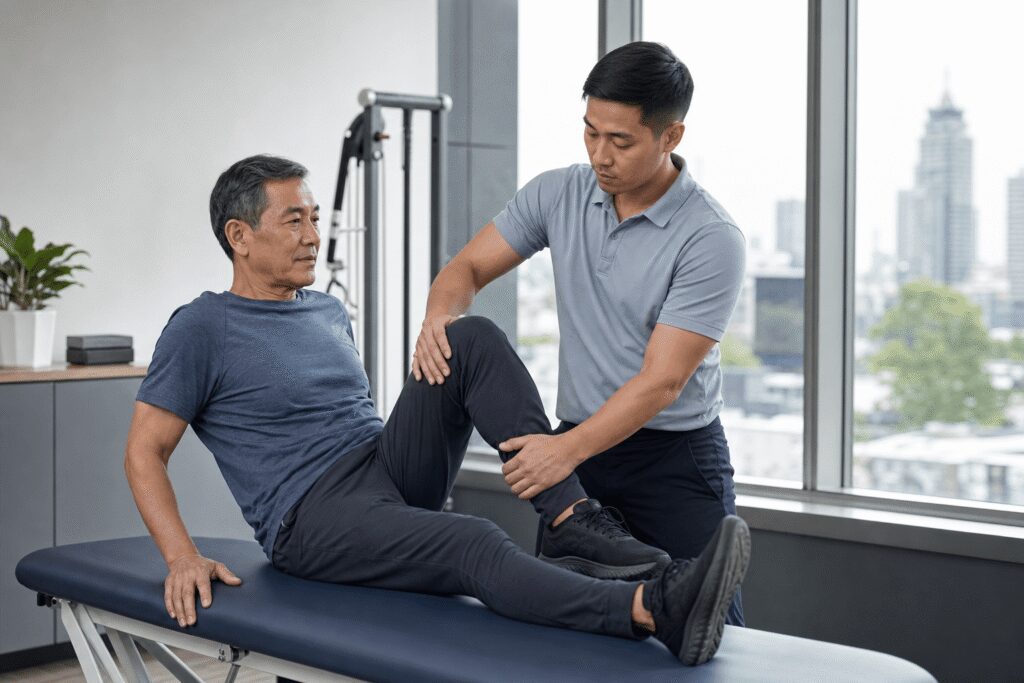
Can physical therapy help arthritis? Yes, physical therapy is one of the most effective non-surgical treatments for managing arthritis symptoms and improving quality of life. Whether you’re dealing with osteoarthritis, rheumatoid arthritis, or another inflammatory joint condition, a structured physical therapy program can reduce pain, restore mobility, and slow disease progression.
This guide explains how physical therapy works for arthritis, what exercises and treatments you’ll encounter, and what results to expect. You’ll learn about joint-specific strategies, safety guidelines, and how to work effectively with your physiotherapist to build a sustainable arthritis management plan.
Quick Answer
Physical therapy helps arthritis by strengthening muscles around affected joints, improving range of motion, reducing inflammation, and teaching pain management techniques. Most patients see measurable improvements in mobility and pain levels within 4-6 weeks of consistent treatment.
How Physical Therapy Helps Arthritis: The Science and Benefits
Physical therapy targets the root causes of arthritis-related disability: weak muscles, stiff joints, poor movement patterns, and chronic inflammation. When cartilage breaks down in arthritic joints, surrounding muscles must work harder to stabilize the area. This creates a cycle of overuse, fatigue, and worsening pain.
A physiotherapist interrupts this cycle through targeted interventions. Strengthening exercises build muscle support around vulnerable joints, reducing mechanical stress on damaged cartilage. Range of motion work maintains or restores joint flexibility, preventing the stiffness that makes everyday activities difficult.
Manual therapy techniques reduce inflammation and improve tissue mobility. Your physiotherapist might use joint mobilization, soft tissue massage, or specialized movements to decrease swelling and restore normal joint mechanics. These hands-on approaches complement exercise by preparing tissues for movement.
The American Physical Therapy Association recognizes physical therapy as a first-line treatment for arthritis, particularly osteoarthritis. Research shows that consistent physical therapy can delay or eliminate the need for corticosteroid injections or joint replacement surgery.
At ProMed Wellness Centre in North York, we see arthritis patients progress from limited mobility to resuming activities they thought were no longer possible. The key is starting treatment before joint damage becomes severe and maintaining a consistent exercise routine between sessions.
Key Takeaways
- Expect measurable pain reduction and mobility improvements within 4-6 weeks.
- Strengthen muscles around arthritic joints to reduce mechanical stress significantly.
- Combine manual therapy with exercise for faster inflammation reduction.
- Start treatment early to delay or prevent surgical interventions.
- Maintain consistent home exercises between physiotherapy sessions for best results.
Physical Therapy Treatment Approaches for Different Types of Arthritis
Not all arthritis responds to the same treatment approach. The type of arthritis you have determines which techniques your physiotherapist prioritizes and how aggressively they can progress your program.
Osteoarthritis vs Rheumatoid Arthritis: Treatment Modifications
Osteoarthritis physical therapy focuses on mechanical support and joint protection. Since osteoarthritis is a wear-and-tear condition affecting cartilage, treatment emphasizes building muscle strength to offload damaged joints. Weight-bearing exercises, resistance training, and functional movement patterns dominate the treatment plan.
Rheumatoid arthritis requires a more cautious approach. Because this autoimmune condition causes inflammation that fluctuates unpredictably, your physical therapy treatment plan for arthritis must adapt to your current symptom level. During flare-ups, your physiotherapist focuses on gentle range of motion exercises and pain management techniques rather than aggressive strengthening.
Psoriatic Arthritis and Other Inflammatory Conditions
Psoriatic arthritis combines features of both mechanical and inflammatory arthritis. Physical therapy for this condition balances strength work with inflammation management. Ankylosing spondylitis and other inflammatory arthritis types benefit from targeted spinal mobility exercises and posture correction.
The multidisciplinary team at ProMed Wellness Centre coordinates care across specialties when treating inflammatory arthritis. Patients often benefit when physiotherapy works alongside massage therapy to reduce muscle tension that develops around inflamed joints.
During arthritis flare-ups, switch from strengthening exercises to gentle range of motion work. We’ve found that maintaining movement without loading inflamed joints prevents stiffness while allowing tissues to recover, speeding your return to full training.
Essential Exercises Used in Physical Therapy for Arthritis
Physical therapy for arthritis relies on specific exercise categories, each targeting different aspects of joint health. Your program will include combinations of these approaches based on which joints are affected and your current functional level.
Range of Motion and Flexibility Exercises
Range of motion exercises for arthritis maintain or restore joint flexibility. These movements take each joint through its available arc without resistance, preventing the stiffness that develops when arthritis makes movement painful. For shoulder arthritis, pendulum exercises and wall walks gradually increase overhead reach. Knee arthritis responds to heel slides and seated knee extensions. Hip arthritis benefits from supine hip flexion and lying hip rotations. Perform these exercises daily, even on days you don’t see your physiotherapist.
Strengthening Exercises for Joint Support
Strengthening exercises build the muscular scaffolding that protects arthritic joints. When muscles are weak, joints absorb more impact during walking, climbing stairs, and other daily activities. Isometric exercises contract muscles without moving joints, making them ideal during painful flare-ups. Wall squats, quadriceps sets, and gluteal squeezes build strength while minimizing joint irritation. Progress to resistance band exercises, light weights, or body-weight movements as tolerance improves.
For knee arthritis, straight leg raises and terminal knee extensions strengthen the quadriceps. Hip arthritis responds to clamshells, side-lying leg lifts, and bridging exercises. Shoulder arthritis improves with rotator cuff strengthening using resistance bands or light dumbbells. Your physiotherapist carefully calibrates exercise intensity. Professional physiotherapy guidance ensures you’re working at the right intensity for your current condition.
Ready to start your recovery?
Our multidisciplinary team in North York offers physiotherapy, chiropractic, massage therapy, and more under one roof. Direct billing available, no referral needed.
What to Expect: Your Physical Therapy Treatment Plan for Arthritis
Your first physiotherapy appointment focuses on assessment. Your therapist evaluates joint mobility, muscle strength, gait patterns, and functional limitations. They’ll ask about pain levels, what activities trigger symptoms, and what goals matter most to you.
Expect objective measurements. Your physiotherapist might measure joint angles with a goniometer, test muscle strength using manual resistance, and observe how you perform functional tasks. These baseline measurements track progress throughout treatment.
Initial sessions emphasize education and pain management. You’ll learn about your specific arthritis type, what movements to modify, and how to manage symptoms at home. Your physiotherapist might use ice, heat, ultrasound, or electrical stimulation to reduce pain and inflammation before starting exercises.
Treatment frequency varies based on symptom severity. Acute flare-ups might require twice-weekly sessions for 2-3 weeks. Chronic stable arthritis often responds to weekly sessions over 6-8 weeks, then transitioning to monthly maintenance visits.
| Treatment Phase | Session Frequency | Primary Focus | Duration |
|---|---|---|---|
| Acute/Flare-Up | 2-3x per week | Pain management, gentle ROM | 2-3 weeks |
| Active Treatment | 1-2x per week | Strengthening, functional training | 6-8 weeks |
| Maintenance | 1x per month | Program progression, monitoring | Ongoing |
Your program evolves as you improve. Early exercises focus on pain-free range of motion and gentle muscle activation. As tolerance builds, your physiotherapist adds resistance, increases repetitions, and introduces functional movements that mimic real-world activities. Most patients notice initial improvements within 2-3 weeks: less morning stiffness, easier walking, reduced pain during daily activities.
Joint-Specific Physical Therapy Strategies
Arthritis affects different joints in distinct ways, and treatment outcomes vary significantly by joint location. Understanding these differences helps set realistic expectations and demonstrates why individualized treatment matters.
Knee Arthritis: Targeted Exercises and Outcomes
Knee arthritis creates pain during weight-bearing activities. Your physiotherapist focuses on quadriceps strengthening since these muscles control knee motion during walking, stairs, and standing. Straight leg raises form the foundation: lie on your back with one knee bent, keep the other leg straight, and lift it to match the bent knee’s height. Hold for 5 seconds, then lower slowly. Start with 10 repetitions twice daily.
Terminal knee extensions strengthen the quadriceps in its most functional range. Wall squats build overall leg strength: lean against a wall, slide down until knees bend to 45 degrees, hold for 10 seconds, then slide back up. Begin with 5 repetitions and progress to 10. Balance exercises prevent falls that become more likely when knee pain alters gait patterns.
Hip Arthritis: Movement Strategies and Pain Relief
Hip arthritis limits activities requiring hip flexion: sitting, bending, climbing stairs. Treatment emphasizes hip abductor and extensor strengthening. Clamshells target hip abductors: lie on your side with knees bent, keep feet together, and lift the top knee while keeping hips stacked. Hold for 3 seconds, then lower. Start with 10 repetitions per side.
Bridges strengthen hip extensors and gluteal muscles. Lie on your back with knees bent and feet flat. Lift your hips until your body forms a straight line from shoulders to knees. Hold for 5 seconds, then lower. Begin with 8-10 repetitions. Hip arthritis responds particularly well to aquatic therapy, where buoyancy reduces joint loading while allowing strengthening work.
Shoulder Arthritis: Mobility and Function Restoration
Shoulder arthritis restricts overhead reaching, making tasks like shelving items or washing hair difficult. Physical therapy emphasizes rotator cuff strengthening and scapular stabilization. Pendulum exercises promote gentle motion: bend forward, let your affected arm hang, and use your body to create small circular motions without actively moving your shoulder. Perform for 2-3 minutes twice daily.
Wall walks improve overhead reach. Rotator cuff strengthening uses resistance bands: attach a band at waist height, hold with elbow bent 90 degrees, rotate your arm outward against resistance, then return slowly. Perform 10-12 repetitions. Manual therapy plays a larger role in shoulder treatment than weight-bearing joints. Shoulder arthritis patients typically see range of motion improvements of 20-30 degrees within 6-8 weeks.
Hand and Spine Arthritis: Specialized Approaches
Hand arthritis affects grip strength and fine motor control. Treatment focuses on maintaining finger and thumb mobility through range of motion exercises and putty exercises for strengthening. Spine arthritis requires postural correction and core strengthening. Your physiotherapist addresses muscle imbalances that develop as your body compensates for spinal stiffness. Cat-cow stretches, pelvic tilts, and bird-dog exercises form the foundation of spine arthritis programs.
Safety Guidelines and When to Stop Exercising
Exercise is medicine for arthritis, but improper dosing causes setbacks. Understanding the difference between productive discomfort and harmful pain prevents injury while maximizing progress.
Expect some muscle soreness when starting new exercises. This post-exercise soreness peaks 24-48 hours after activity and feels like a dull ache in the muscles you worked. It’s a normal sign of muscle adaptation and shouldn’t stop you from exercising.
Joint pain during exercise requires more careful interpretation. Mild discomfort that rates 3-4 out of 10 on a pain scale is acceptable if it resolves within an hour of stopping. Sharp pain, pain exceeding 5 out of 10, or discomfort lasting more than two hours signals excessive intensity.
Red Flags Requiring Immediate Medical Attention
Stop exercising immediately and contact your healthcare provider if you experience any of these warning signs:
Sudden severe joint pain that prevents weight-bearing or movement suggests acute joint injury or inflammatory flare requiring medical evaluation. Sharp, stabbing pain that differs from your usual arthritis discomfort may indicate cartilage tears, ligament damage, or other structural problems.
Significant joint swelling that develops during or within hours of exercise, especially if accompanied by warmth and redness, signals excessive inflammation. Some mild swelling is normal, but rapid onset of notable swelling requires assessment.
Fever combined with joint pain indicates possible infection or systemic inflammatory response. Seek immediate medical attention for fever above 38°C (100.4°F) with joint symptoms, particularly if you have rheumatoid arthritis or take immunosuppressive medications.
Loss of motion or joint locking that wasn’t present before exercise may indicate loose cartilage fragments or other mechanical problems requiring medical intervention. If a joint suddenly won’t bend or straighten fully, stop activities and contact your physiotherapist or physician.
Visible joint deformity or instability suggests structural damage beyond routine arthritis. If a joint appears misshapen or feels like it’s giving way unpredictably, seek medical evaluation before continuing exercises.
Numbness, tingling, or weakness in the limb beyond the affected joint, especially if sudden or progressive, may indicate nerve compression requiring urgent assessment. Spine arthritis can cause nerve impingement that needs prompt treatment.
Managing Exercise Intensity Safely
The two-hour pain rule guides exercise intensity: if your pain increases during exercise but returns to baseline within two hours, the activity was appropriate. Pain persisting beyond two hours indicates you exceeded your current tolerance and should reduce intensity next session.
Morning stiffness lasting more than 30 minutes after waking, especially if worse than usual, suggests yesterday’s activity was too intense. Adjust your program by reducing repetitions, resistance, or range of motion until stiffness normalizes.
Never push through significant pain to complete prescribed repetitions. Your physiotherapist wants honest feedback about what you can tolerate. It’s better to perform five pain-free repetitions than force through fifteen painful ones that cause a week-long flare-up.
At-Home Exercise Protocols Between Physiotherapy Sessions
Home exercises determine whether physical therapy succeeds or fails. Clinic sessions provide guidance and hands-on treatment, but the work you do independently drives long-term improvement. Understanding clear progression guidelines helps you advance safely without triggering flare-ups.
Starting Your Home Program
Start with a manageable routine. Three exercises performed once daily beats six exercises you’ll abandon after a week. Your physiotherapist will likely prescribe 3-5 core exercises initially, adding more as you build the habit. Time your exercises strategically. Many arthritis patients find late morning ideal, after initial stiffness resolves but before fatigue sets in. Apply heat before exercises to reduce stiffness and improve tissue flexibility. Use ice after exercises if you experience increased discomfort, applying for 15-20 minutes to reduce inflammation.
Clear Exercise Progression Guidelines
Week 1-2: Focus on range of motion exercises only. Perform movements through available range without resistance. Complete 10 repetitions, 2 times daily. Your goal is establishing the exercise habit and identifying your baseline tolerance without causing flare-ups.
Week 3-4: Add isometric strengthening exercises. Begin with 5-second holds, performing 8-10 repetitions once daily. Progress to 10-second holds if you complete week 3 without increased pain or stiffness lasting more than two hours post-exercise.
Week 5-6: Transition from isometric to dynamic strengthening exercises. Start with body weight only or lightest resistance band. Perform 8-10 repetitions for 2 sets. When you can complete two consecutive sessions with pain levels below 4 out of 10 during exercise and returning to baseline within one hour, increase to 12 repetitions.
Week 7-8: Add resistance progression. Increase resistance band tension by one level or add 1-2 pound weights. Maintain 10-12 repetitions for 2 sets. Progress only if morning stiffness remains under 30 minutes and exercise-related pain resolves within two hours.
Week 9-12: Incorporate functional movement patterns that mimic daily activities. Practice sit-to-stand exercises, step-ups, or reaching patterns that combine strength with coordination. Perform 8-10 repetitions of functional exercises 3-4 times weekly, maintaining separate strengthening sessions on alternate days.
Beyond 12 weeks: Focus on maintenance and gradual load increases. Add resistance in small increments every 3-4 weeks if current level feels easy and you maintain pain-free function. Long-term success requires permanent commitment to exercise, not just completing initial program.
Monitoring Progress and Making Adjustments
Track your exercises in a simple log. Note which exercises you performed, how many repetitions, resistance level, and your pain during and two hours after activity. Rest days matter. Tissues need recovery time to adapt to exercise stress. Schedule rest days every 2-3 days during initial strengthening phases. Expect plateaus. Progress isn’t linear. You might improve steadily for weeks, then stall for 2-3 weeks before advancing again.
| Week | Exercise Type | Repetitions/Sets | Progression Trigger |
|---|---|---|---|
| 1-2 | Range of motion only | 10 reps, 2x daily | Complete without flare-ups |
| 3-4 | Isometric holds | 5-10 sec holds, 8-10 reps | Pain under 4/10, resolves in 1 hour |
| 5-6 | Dynamic strengthening | 8-10 reps, 2 sets | Maintain 2 sessions pain-free |
| 7-8 | Resistance progression | 10-12 reps, 2 sets | Morning stiffness under 30 min |
| 9-12 | Functional movements | 8-10 reps, 3-4x weekly | Pain-free daily function |
Comparing Treatment Effectiveness Across Arthritis Types
Physical therapy outcomes vary significantly based on arthritis type and disease stage. Understanding these differences helps set realistic expectations for your recovery timeline and functional goals.
Osteoarthritis responds most predictably to physical therapy. Since it’s primarily a mechanical condition, strengthening and movement optimization directly address the underlying problem. Early-stage osteoarthritis shows better results than advanced disease.
Rheumatoid arthritis outcomes depend heavily on disease activity control. Physical therapy works best when your rheumatologist has achieved good pharmaceutical management of inflammation. During well-controlled periods, strengthening exercises and aerobic conditioning provide benefits comparable to osteoarthritis treatment.
Psoriatic arthritis sits between osteoarthritis and rheumatoid arthritis in treatment response. Joint damage patterns vary more individually, so your physiotherapist tailors treatment based on which joints are affected and whether you’re experiencing active inflammation.
| Arthritis Type | Expected Improvement Rate | Treatment Timeline | Key Success Factor |
|---|---|---|---|
| Osteoarthritis | 60-70% significant improvement | 6-8 weeks | Consistent exercise progression |
| Rheumatoid Arthritis | 50-60% during controlled periods | 12-16 weeks | Disease activity control |
| Psoriatic Arthritis | 55-65% with individualized approach | 10-14 weeks | Treatment flexibility |
Frequently Asked Questions About Physical Therapy for Arthritis
How can physical therapy help treat arthritis?
Physical therapy treats arthritis by strengthening muscles that support affected joints, improving range of motion to reduce stiffness, and teaching pain management strategies. Stronger muscles reduce mechanical stress on damaged cartilage while improved flexibility maintains functional movement. Most patients experience measurable pain reduction and improved mobility within 4-6 weeks of consistent treatment.
What types of exercises are best for arthritis in physical therapy?
The best arthritis exercises include range of motion exercises to maintain flexibility, strengthening exercises to support joints, and low-impact aerobic activities. Knee arthritis responds to straight leg raises and terminal knee extensions. Hip arthritis improves with clamshells and bridges. Shoulder arthritis benefits from rotator cuff strengthening and wall walks. Your physiotherapist selects exercises based on affected joints and current functional level.
Can physical therapy make arthritis worse?
Physical therapy can temporarily increase symptoms if exercise intensity exceeds your current tolerance, but it doesn’t worsen the underlying arthritis condition. Some muscle soreness is normal when starting treatment. However, sharp pain, swelling, or symptoms lasting more than two hours after exercise indicate excessive intensity. A qualified physiotherapist monitors your response and adjusts treatment to stay within safe limits.
How often should someone with arthritis see a physical therapist?
Treatment frequency varies by symptom severity. Acute flare-ups typically require 2-3 sessions weekly for 2-3 weeks. Most chronic arthritis patients benefit from 1-2 weekly sessions over 6-8 weeks during active treatment, then transition to monthly maintenance visits. Between professional sessions, you’ll perform home exercises daily. Consistent home exercise matters more than session frequency for long-term results.
How long does it take to see improvements from physical therapy for arthritis?
Most arthritis patients notice initial improvements within 2-3 weeks, including reduced morning stiffness and easier walking. Significant functional gains typically appear at 4-6 weeks of consistent treatment. Maximum benefit often requires 8-12 weeks. Osteoarthritis generally responds faster than inflammatory arthritis types. Early-stage arthritis shows quicker improvement than advanced disease.
Do I need a referral to see a physiotherapist for arthritis in Ontario?
No referral is needed to see a physiotherapist in Ontario. You can book directly with a physiotherapy clinic for arthritis assessment and treatment. While OHIP doesn’t cover physiotherapy services, many extended health insurance plans provide coverage. Some clinics offer direct billing to insurance providers. If you’re considering physiotherapy for arthritis, understanding your coverage options helps plan for treatment costs.
What’s the difference between physiotherapy and chiropractic care for arthritis?
Physiotherapy for arthritis focuses on exercise-based rehabilitation, strengthening muscles around affected joints, and improving functional movement patterns. Chiropractic care emphasizes spinal alignment and joint manipulation to improve nervous system function and reduce pain. Both professions can help arthritis symptoms, but physiotherapy relies more heavily on progressive exercise programs while chiropractic uses manual adjustments. Many patients benefit from understanding how these approaches differ.
Taking the Next Step in Your Arthritis Management
Physical therapy offers a proven, non-surgical path to reducing arthritis pain and improving function. The evidence is clear: consistent treatment combining strengthening exercises, range of motion work, and manual therapy techniques helps most arthritis patients return to activities they enjoy. Starting early provides the best outcomes, addressing joint problems before damage becomes severe.
ProMed Wellness Centre in North York provides comprehensive arthritis care with direct billing available and no referral needed. Our physiotherapists create personalized treatment plans based on your specific arthritis type, affected joints, and functional goals. Located at 2001B Finch Ave West, we offer multilingual services in English and Farsi, making quality care accessible to North York’s diverse community. Ready to start managing your arthritis effectively? Book your initial physiotherapy assessment or call (647) 349-8765 to discuss how we can help you move better and feel stronger.