
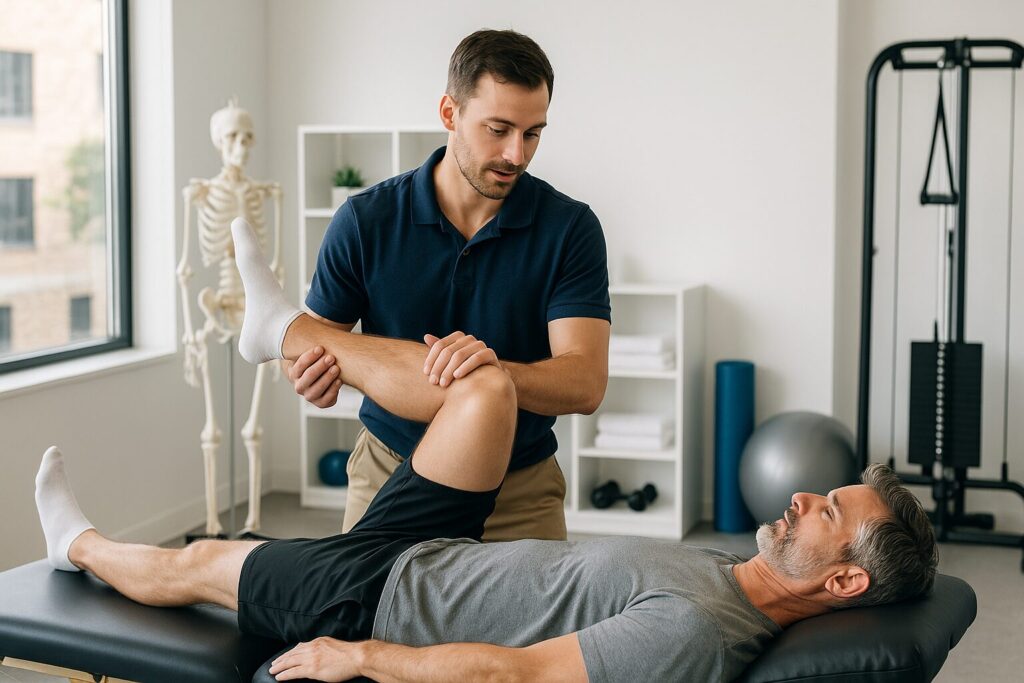
What Is Physiotherapy: Understanding How Physical Rehabilitation Restores Movement and Function
Most people think physiotherapy is just about massage and stretching, perhaps something an athlete needs after tearing a ligament. That narrow view misses the profound impact this evidence-based profession has on millions of people recovering from workplace injuries, managing chronic conditions, navigating post-surgical rehabilitation, and preventing future problems. From the 45-year-old office worker struggling with persistent lower back pain to the senior learning to walk again after a hip replacement, physiotherapy addresses the fundamental human need to move without pain.
The World Health Organization recognizes physiotherapy as an essential health service, yet confusion persists about what physiotherapists actually do and when you should see one. Unlike passive treatments where something is simply done to you, physiotherapy actively engages you in your recovery through movement, exercise, manual therapy, and education. This distinction matters because sustainable recovery requires your participation, not just temporary relief.
Understanding physiotherapy means recognizing it as both a science and an art. Physiotherapists apply rigorous clinical reasoning rooted in anatomy, biomechanics, and neuroscience while adapting treatment to your unique circumstances, goals, and lifestyle. Whether you are recovering from a motor vehicle accident or managing arthritis, the approach remains personalized and progressive.
The Science Behind Physical Rehabilitation
Physiotherapy operates on fundamental principles of how the human body heals, adapts, and maintains function. At its core, this profession addresses impairments in the musculoskeletal, neurological, cardiovascular, and respiratory systems. The therapeutic interventions are grounded in decades of research demonstrating how targeted movement, manual techniques, and progressive loading facilitate tissue healing and restore normal movement patterns.
When you injure soft tissue like muscles, tendons, or ligaments, your body initiates a predictable healing cascade. Inflammation arrives first, followed by tissue repair and remodeling. Physiotherapists understand these phases intimately and adjust treatment accordingly. Early intervention might focus on controlling inflammation and maintaining range of motion. As healing progresses, treatment shifts toward strengthening weakened structures and retraining movement patterns that may have compensated during injury.
Pain science has revolutionized how physiotherapists approach treatment. We now understand that chronic pain does not always reflect ongoing tissue damage. Sometimes the nervous system becomes hypersensitive, creating pain signals even when tissues have healed. This knowledge shapes modern physiotherapy approaches, incorporating pain neuroscience education alongside physical interventions. Patients learn why they hurt and how movement, despite initial discomfort, can actually reduce pain over time.
The biomechanical assessment forms another pillar of physiotherapy practice. How you move reveals volumes about why certain areas break down. A knee problem might stem from hip weakness. Shoulder pain could originate from poor thoracic spine mobility. Physiotherapists analyze these movement patterns, identifying the root cause rather than simply treating symptoms. This systems-based approach explains why effective treatment often addresses areas beyond where you feel pain.
Conditions and Injuries Treated Through Physiotherapy
The scope of physiotherapy extends far beyond sports injuries, though that remains an important area. Musculoskeletal conditions constitute the largest category, encompassing everything from acute sprains and strains to chronic conditions like osteoarthritis and fibromyalgia. Lower back pain, the leading cause of disability worldwide, responds particularly well to physiotherapy interventions combining manual therapy, specific exercises, and movement re-education.
Neurological rehabilitation represents another significant domain. Stroke survivors work with physiotherapists to regain mobility and relearn functional movements. People living with Parkinson’s disease, multiple sclerosis, or spinal cord injuries benefit from targeted interventions that maximize independence and quality of life. The neuroplasticity of the brain, its ability to rewire and adapt, makes rehabilitation effective even years after initial injury or disease onset.
Post-surgical recovery relies heavily on physiotherapy expertise. Joint replacements, ACL reconstructions, rotator cuff repairs, and spinal surgeries all require structured rehabilitation to achieve optimal outcomes. Your surgeon repairs the structure, but physiotherapy restores function. Without proper rehabilitation, surgical repairs may not achieve their full potential, leaving you with residual pain, stiffness, or weakness.
Workplace injuries covered under WSIB often require physiotherapy management. Repetitive strain injuries, lifting injuries, and occupational-related musculoskeletal disorders benefit from both treatment and workplace modification advice. Similarly, motor vehicle accident injuries including whiplash, concussions, and soft tissue injuries require specialized assessment and treatment protocols that address both physical and psychological recovery components.
Respiratory conditions also fall within physiotherapy scope. Chronic obstructive pulmonary disease (COPD), post-COVID respiratory complications, and pre/post-operative breathing exercises help patients maximize lung function and exercise tolerance. Cardiovascular rehabilitation, often following heart attacks or cardiac surgery, helps patients safely return to activity while reducing future risk.
Core Treatment Techniques and Therapeutic Approaches
Manual therapy techniques form a cornerstone of physiotherapy practice. These hands-on approaches include joint mobilizations, soft tissue release, myofascial techniques, and nerve gliding. When a joint becomes stiff, perhaps after immobilization or due to arthritis, gentle mobilizations can restore normal arthrokinematics, the subtle gliding and rolling movements that occur within joints. Soft tissue techniques address muscle tension, trigger points, and fascial restrictions that limit movement and contribute to pain.
Therapeutic exercise constitutes the most critical component of long-term recovery. Unlike generic fitness programs, physiotherapy exercises target specific impairments identified during assessment. Strengthening exercises rebuild muscles weakened by injury, disuse, or neurological conditions. Stretching addresses flexibility limitations. Balance and proprioceptive training reduce fall risk and improve body awareness. The progression follows a logical sequence, gradually increasing difficulty as your capacity improves.
Movement pattern training teaches you to move differently. If you have been compensating for months or years, your brain has learned dysfunctional patterns. Simply strengthening muscles is not enough. You need to retrain the motor control, the way your nervous system coordinates muscle activation. This might involve mirror therapy, biofeedback, or simply mindful practice of correct movement with physiotherapist guidance and cueing.
Modalities like ultrasound, electrical stimulation, laser therapy, and heat/cold application complement hands-on treatment and exercise. While not primary interventions, these tools can reduce pain and inflammation, enhance tissue healing, and make exercise more tolerable. At ProMed Wellness Centre, we integrate evidence-based modalities when they add value to your recovery, never as standalone treatments.
Education might be the most underrated yet powerful physiotherapy intervention. Understanding your condition, knowing what to expect during recovery, and learning self-management strategies reduces fear, improves adherence, and empowers you to take control of your health. Physiotherapists spend significant time explaining the why behind treatment recommendations, not just the what.
The Multidisciplinary Advantage in Comprehensive Care
Modern healthcare increasingly recognizes that complex conditions often require multiple perspectives and skill sets. A multidisciplinary clinic model allows physiotherapists to collaborate with other regulated health professionals, creating comprehensive treatment plans that address all aspects of your condition. This integrated approach often produces superior outcomes compared to single-discipline treatment.
Combining physiotherapy with chiropractic care can be particularly effective for spinal conditions. While physiotherapists focus on movement re-education, strengthening, and soft tissue work, chiropractors provide specific spinal adjustments that restore joint mobility. The synergy between these approaches addresses both the muscular and skeletal components of spinal dysfunction.
Massage therapy complements physiotherapy by addressing deep-seated muscle tension and promoting relaxation. When muscles remain chronically tight despite exercise and manual therapy, registered massage therapists bring specialized techniques that prepare tissues for more active rehabilitation. The increased blood flow and reduced muscle guarding following massage can make subsequent physiotherapy exercises more effective and comfortable.
Osteopathic treatment offers another complementary perspective, viewing the body as an integrated whole where structure and function are interrelated. Osteopathic manual practitioners might identify and address restrictions in areas the physiotherapist also treats, but through different techniques and philosophical approaches. This redundancy in a positive sense ensures comprehensive tissue and joint mobilization.
Custom orthotics fabricated by a chiropodist can enhance physiotherapy outcomes when foot mechanics contribute to problems higher in the kinetic chain. Knee, hip, or back pain sometimes originates from poor foot alignment or abnormal gait patterns. Combining orthotic intervention with physiotherapy exercises and gait training addresses both the structural and functional components simultaneously.
What to Expect During Your Physiotherapy Journey
Your first physiotherapy appointment involves comprehensive assessment, not just treatment. Expect to spend 45 to 60 minutes with your physiotherapist, who will take a detailed history, perform physical tests, and develop an initial treatment plan. The history includes questions about your current symptoms, mechanism of injury if applicable, past medical history, medications, and how the condition affects your daily life and goals.
Physical examination assesses multiple factors: range of motion, strength, flexibility, posture, movement patterns, special orthopedic tests, neurological function, and palpation of relevant structures. Your physiotherapist is gathering objective data to complement your subjective experience. These measurements establish baseline values that track progress over subsequent visits.
Treatment usually begins during the first session, though the intensity remains conservative while your physiotherapist gauges your response. Initial interventions might include manual therapy to reduce pain and improve mobility, teaching you one or two simple exercises, and discussing activity modification strategies. You will leave with a home program because what you do between appointments matters as much as the treatment received during sessions.
Follow-up visits typically occur once or twice weekly initially, then less frequently as you improve. Each session includes reassessment, treatment, exercise progression, and home program updates. The frequency and duration of treatment depend on your condition, severity, goals, and insurance coverage. Acute injuries might resolve in four to six weeks, while chronic conditions or post-surgical rehabilitation could require several months.
Communication forms a vital part of the therapeutic relationship. Speak up if something hurts beyond normal therapeutic discomfort, if you cannot perform prescribed exercises, or if symptoms change unexpectedly. Good physiotherapists adjust treatment based on your feedback and clinical reasoning. Recovery rarely follows a perfectly linear path. Setbacks happen, but they provide valuable information that guides treatment modifications.
Coverage, Accessibility, and When You Should Seek Treatment
Ontario residents can access physiotherapy through multiple pathways. Many extended health insurance plans cover physiotherapy, typically providing $300 to $1,500 annually depending on your policy. Some plans cover a specific number of visits rather than dollar amounts. Direct billing makes the process seamless, allowing you to receive treatment without upfront payment, with claims submitted directly to your insurer.
Motor vehicle accident victims in Ontario have coverage through their auto insurance under accident benefits. These benefits typically cover physiotherapy, massage therapy, and other rehabilitation services necessary for recovery. WSIB covers workplace injuries comprehensively, including all necessary physiotherapy treatments. In both cases, referrals are not required, though specific forms and procedures must be followed.
You do not need a doctor’s referral to see a physiotherapist in Ontario. Physiotherapists are primary care practitioners, meaning you can book directly whenever you recognize the need. However, some insurance companies require a physician referral for coverage, so verify your policy details. Veterans Affairs Canada also covers physiotherapy for eligible veterans through specific programs.
When should you seek physiotherapy? Pain persisting beyond a few days after injury warrants assessment. Recurring problems that keep coming back indicate underlying issues requiring professional intervention. Post-surgical patients should begin physiotherapy as recommended by their surgeon, often within days of certain procedures. Chronic conditions like arthritis benefit from physiotherapy even without acute injury, as exercise therapy and education improve function and slow progression.
Do not wait until pain becomes unbearable. Early intervention typically leads to faster, more complete recovery. Many people delay seeking treatment, hoping the problem will resolve on its own. While some minor issues do self-resolve, many others worsen or become chronic without proper management. The cost of early physiotherapy pales compared to prolonged disability, medication dependence, or eventual surgical intervention.
ProMed Wellness Centre, located at 2001B Finch Ave West in North York, removes common barriers to accessing care. No referral requirements, direct billing for most insurance plans, multilingual staff serving the diverse Toronto community, and a multidisciplinary team under one roof simplify the process of getting the help you need when you need it.
Evidence-Based Practice and Evolving Treatment Paradigms
Physiotherapy has undergone significant evolution as research challenges older assumptions and validates newer approaches. The passive treatment model where patients received interventions done to them has given way to active rehabilitation emphasizing exercise, education, and self-management. This shift reflects robust evidence showing that active approaches produce superior long-term outcomes across most musculoskeletal conditions.
Pain neuroscience education represents one significant advancement. Teaching patients about pain mechanisms, explaining why chronic pain does not always equal tissue damage, and demonstrating how movement can be therapeutic despite discomfort has shown remarkable results. This knowledge reduces fear-avoidance behaviors, improves treatment adherence, and enhances outcomes when combined with graded exercise exposure.
The biopsychosocial model now guides physiotherapy practice for complex cases. This framework recognizes that biological factors like tissue damage, psychological factors like fear and depression, and social factors like work demands and family support all influence recovery. Comprehensive treatment addresses these multiple dimensions rather than focusing solely on physical impairments.
Movement quality versus pure strength has gained attention in rehabilitation research. Simply making muscles stronger does not guarantee improved function if movement patterns remain dysfunctional. Modern physiotherapy increasingly emphasizes motor control, movement coordination, and functional task training alongside traditional strengthening and stretching exercises.
Measurement and outcome tracking ensure treatments actually work. Physiotherapists use validated questionnaires, functional tests, and objective measurements to track progress. If an intervention is not producing expected improvements within a reasonable timeframe, evidence-based practitioners modify their approach rather than persisting with ineffective treatments.
Frequently Asked Questions About Physiotherapy
How is physiotherapy different from massage therapy or chiropractic care?
While these professions overlap in some areas, they maintain distinct scopes and approaches. Physiotherapy emphasizes active rehabilitation through exercise therapy, movement re-education, and progressive loading to restore function and build resilience. Physiotherapists are trained to assess and treat across multiple body systems, including musculoskeletal, neurological, cardiovascular, and respiratory conditions. Massage therapy focuses primarily on soft tissue manipulation to reduce muscle tension, improve circulation, and promote relaxation. Chiropractic care emphasizes spinal alignment and joint manipulation to restore proper biomechanics. Many conditions benefit from combining these approaches, which is why multidisciplinary clinics offer comprehensive care that draws on each profession’s unique strengths.
Will physiotherapy hurt, and should I exercise through pain?
Some therapeutic discomfort is normal and even necessary for recovery, but sharp or severe pain is not. Manual therapy techniques might create temporary soreness as restricted tissues are mobilized. Therapeutic exercises should challenge you without causing significant pain increases that last more than a few hours. The common guideline suggests keeping exercise-related pain below 3 or 4 out of 10 on a pain scale, and any increased discomfort should resolve within 24 hours. Your physiotherapist will teach you to distinguish between productive therapeutic discomfort and harmful pain. Chronic pain conditions require special consideration, as pain does not always indicate tissue damage. In these cases, graded exposure to movement despite discomfort, progressed carefully under physiotherapist guidance, often reduces long-term pain levels.
How many physiotherapy sessions will I need?
Treatment duration varies widely based on your condition, severity, how long the problem has existed, your overall health, and your treatment goals. Acute injuries like simple ankle sprains might require 4 to 6 sessions over several weeks. Post-surgical rehabilitation for major procedures like knee replacements typically involves 8 to 12 weeks of progressive treatment. Chronic conditions might need longer-term management with gradually decreasing frequency as you develop self-management skills. Your physiotherapist will provide an estimated treatment timeline during initial assessment, though this may adjust as your response to treatment becomes clear. Insurance coverage also influences treatment frequency, though physiotherapists work to maximize outcomes within available resources and teach you strategies for continued self-directed recovery.
Can I see a physiotherapist without a doctor’s referral?
Yes, physiotherapists in Ontario are primary contact practitioners, meaning you can book an appointment directly without a physician referral. This autonomy allows faster access to care and reduces burden on the healthcare system. However, some extended health insurance policies require a doctor’s referral for coverage, so verify your specific plan requirements. Physiotherapists maintain collaborative relationships with physicians and will communicate with your doctor when appropriate, particularly for complex cases, when imaging is required, or when symptoms suggest a condition outside the physiotherapy scope. If your physiotherapist identifies red flags or conditions requiring medical investigation, they will refer you to appropriate medical professionals while continuing to manage the rehabilitation components within their scope.
What should I wear and bring to my physiotherapy appointment?
Wear or bring comfortable clothing that allows easy access to the area being treated and permits movement. For lower body conditions, shorts work well. For shoulder or upper back problems, a tank top or sports bra for women allows proper assessment and treatment. Athletic shoes are appropriate for sessions involving gait analysis or exercise. Bring your insurance card, health card, any relevant medical documents like imaging reports or surgical notes, and a list of current medications. If you use assistive devices like a cane, walker, or brace, bring them to your appointment. Your physiotherapist needs to see how you move under normal circumstances, including with any devices you typically use. For first appointments, arriving 10 to 15 minutes early allows time to complete intake paperwork without cutting into your treatment time.
Taking the First Step Toward Recovery
Recovery from injury, management of chronic conditions, or prevention of future problems all start with the decision to seek expert guidance. Physiotherapy offers evidence-based solutions that address the root causes of dysfunction rather than merely masking symptoms. Whether you are dealing with persistent pain, recovering from surgery, managing a workplace injury, or simply want to move better and prevent future problems, physiotherapy provides the tools, knowledge, and support necessary for lasting improvement.
The team at ProMed Wellness Centre combines physiotherapy expertise with complementary disciplines to deliver comprehensive care tailored to your unique needs and goals. Our multidisciplinary approach, direct billing capabilities, multilingual staff, and convenient North York location at 2001B Finch Ave West make accessing the care you need straightforward and stress-free. You can reach our team at (647) 349-8765 or book your appointment online to begin your journey toward better movement, reduced pain, and improved quality of life. Recovery is possible, and it starts with that first step through our door.