
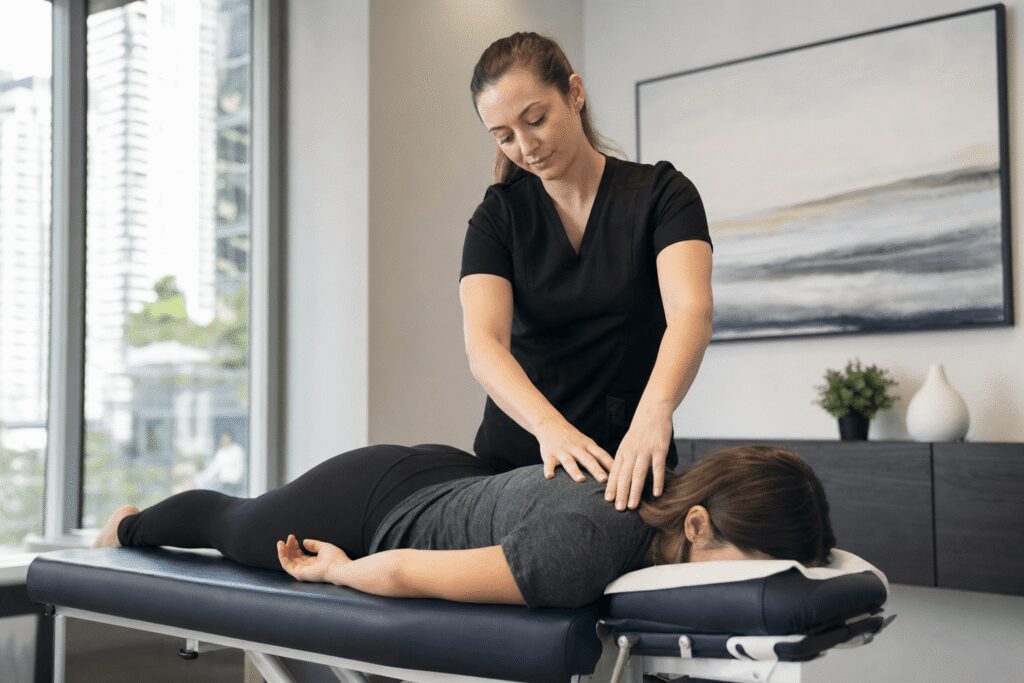
Massage therapy is a regulated healthcare profession in Ontario that uses manual manipulation of soft tissues, including muscles, tendons, ligaments, and connective tissue, to address pain, injury, and dysfunction. Registered Massage Therapists (RMTs) apply various hands-on techniques to improve circulation, reduce muscle tension, enhance mobility, and support overall wellness. Whether you’re dealing with chronic back pain, recovering from a sports injury, or seeking stress relief, understanding what massage therapy involves helps you make informed decisions about your care.
This guide explains what massage therapy is, the conditions it treats, different treatment approaches, what happens during your first appointment, and how massage therapy fits within a comprehensive healthcare plan alongside physiotherapy, chiropractic, and osteopathy.
Quick Answer
Massage therapy is a regulated healthcare treatment where Registered Massage Therapists manually manipulate soft tissues to reduce pain, improve circulation, restore mobility, and support healing from injuries and chronic conditions.
What Is Massage Therapy?
Massage therapy is the assessment and treatment of soft tissues and joints of the body through hands-on manipulation. It’s far more than relaxation or spa treatment. In Ontario, massage therapy is a regulated health profession governed by the College of Massage Therapists of Ontario (CMTO) under the Regulated Health Professions Act.
RMTs complete extensive education in anatomy, physiology, pathology, and treatment techniques. They assess your condition, develop treatment plans, and apply specific manual techniques to address musculoskeletal problems, pain, restricted mobility, and soft tissue injuries.
The treatment works by targeting muscles, tendons, ligaments, fascia, and other connective tissues. Through various pressure levels and techniques, massage therapy increases blood flow to injured areas, breaks down scar tissue, releases muscle tension, and stimulates the body’s natural healing processes.
At our North York clinic, Registered Massage Therapists often coordinate care with physiotherapists, chiropractors, and osteopaths. This multidisciplinary approach means your RMT can consult with other practitioners about your treatment plan, ensuring all manual therapies work together rather than in isolation.
Key Takeaways
- Verify your therapist is registered with the College of Massage Therapists of Ontario
- Expect a thorough health history and physical assessment before any treatment begins
- Choose massage therapy for soft tissue injuries, chronic pain, and muscle tension
- Budget for 30-90 minute sessions depending on your condition and treatment goals
- Ask about direct billing if your extended health plan covers massage therapy
- Consider multidisciplinary care when massage therapy alone isn’t resolving your condition
What Is Massage Therapy Used For?
Massage therapy treats a wide range of musculoskeletal conditions, pain syndromes, and functional limitations. RMTs address both acute injuries and chronic conditions that affect soft tissues and movement patterns.
Common conditions treated include lower back pain, neck pain, headaches, sports injuries, whiplash, repetitive strain injuries like carpal tunnel syndrome, rotator cuff injuries, tennis elbow, plantar fasciitis, and post-surgical rehabilitation. Massage therapy also effectively manages chronic pain conditions including fibromyalgia, osteoarthritis pain, and myofascial pain syndrome.
Beyond injury treatment, massage therapy supports recovery from workplace injuries, motor vehicle accidents, and overuse conditions. It helps manage stress-related muscle tension, improves posture-related pain, and addresses restricted mobility from scar tissue or adhesions.
Pregnant patients seek massage therapy for back pain, sciatica, and edema. Athletes use it for injury prevention, performance enhancement, and faster recovery between training sessions. Office workers benefit from treatment addressing forward head posture, rounded shoulders, and tension from prolonged sitting.
The scope of practice allows RMTs to treat soft tissue dysfunction wherever it occurs in the body. That said, massage therapy works best for conditions primarily involving muscles, fascia, and connective tissue. Joint misalignments may respond better to chiropractic care, while complex movement dysfunction often requires physiotherapy’s exercise-based approach.
When patients present with complex musculoskeletal issues at our North York clinic, we often start with a multidisciplinary assessment. Your RMT might identify joint restrictions requiring chiropractic adjustment, or your physiotherapist may notice muscle guarding that massage therapy can address before exercise progression begins.
Types of Massage Therapy
Registered Massage Therapists use various techniques and approaches based on your condition, treatment goals, and tissue response. Understanding different types helps you know what to expect and communicate your needs effectively.
Swedish Massage
Swedish massage uses long, flowing strokes with light to moderate pressure. Techniques include effleurage (long gliding strokes), petrissage (kneading), friction, tapotement (rhythmic tapping), and vibration. This approach focuses on relaxation, stress reduction, and general circulation improvement. It’s appropriate for first-time massage patients, those seeking wellness maintenance, or anyone who prefers gentler pressure.
Deep Tissue and Therapeutic Massage
Deep tissue massage applies sustained pressure to reach deeper muscle layers and fascia. Your RMT uses slower strokes and more direct pressure to address chronic muscle tension, scar tissue, and adhesions that restrict movement. Therapeutic massage is an umbrella term for treatment-focused massage therapy. It combines various techniques based on assessment findings. Your RMT might use deep tissue work on tight hip flexors, gentle lymphatic drainage around a swollen ankle, and trigger point release for referred pain patterns, all within one session.
Don’t assume deeper pressure equals better results. We regularly see patients whose tissues respond better to lighter, more sustained techniques. Your RMT adjusts pressure based on tissue quality, inflammation levels, and treatment goals, not just your pain tolerance.
Benefits of Massage Therapy
Massage therapy provides both immediate relief and cumulative benefits with consistent treatment. Understanding these benefits helps set realistic expectations for your care.
Pain reduction is often the most immediate benefit. Massage therapy decreases pain by releasing muscle tension, improving circulation to remove inflammatory chemicals, stimulating endorphin release, and interrupting pain signal transmission. Many patients experience significant relief even after a single session.
Improved mobility and flexibility come from releasing tight muscles, breaking down adhesions, and restoring normal tissue length. Restricted shoulder range, tight hamstrings, or limited neck rotation often improve dramatically with targeted treatment.
Enhanced circulation brings fresh oxygen and nutrients to injured tissues while removing metabolic waste products. This supports faster healing from injuries and reduces muscle soreness after exercise or physical work.
Stress reduction and nervous system regulation occur through massage therapy’s effect on the parasympathetic nervous system. Treatment lowers cortisol levels, reduces heart rate, and promotes relaxation. This matters for physical healing, since chronic stress impairs tissue repair.
Scar tissue management helps prevent long-term mobility restrictions after surgery or significant injury. Massage therapy can soften scar tissue, improve its alignment with surrounding tissues, and reduce adhesions that bind structures together. Postural improvement happens when massage therapy releases chronically tight muscles that pull your body out of alignment.
Ready to start your recovery?
Our multidisciplinary team in North York offers physiotherapy, chiropractic, massage therapy, and more under one roof. Direct billing available, no referral needed.
What to Expect at Your First Massage Therapy Appointment
Your first visit involves more than just treatment. RMTs conduct thorough assessments to understand your condition and develop appropriate care plans.
Health History and Assessment Process
You’ll complete intake forms covering your medical history, current medications, previous injuries, surgeries, and any conditions that might affect treatment. Be thorough. Information about heart conditions, blood clots, cancer history, infections, or skin conditions directly impacts treatment safety.
Your RMT will discuss your primary complaint in detail: when it started, what makes it better or worse, previous treatments tried, and how it affects your daily activities. This conversation helps identify patterns and contributing factors.
The physical assessment includes multiple evaluation techniques. Your RMT observes your posture in standing and sitting positions, looking for asymmetries and muscle imbalances. They test active and passive range of motion in affected joints, comparing both sides to identify restrictions. Palpation involves systematically feeling muscles, tendons, and soft tissues to assess texture, tension, temperature, and tenderness. Your RMT performs orthopedic tests specific to your complaint, such as resistance testing to evaluate muscle strength or special tests for rotator cuff injuries.
Your RMT explains assessment findings in plain language, discusses treatment options, and develops a care plan with you. They outline what techniques they’ll use, expected treatment frequency, and estimated timeline for improvement. You have the right to ask questions, request modifications, and decline any technique you’re uncomfortable with. Treatment proceeds only with your informed consent.
Duration and Frequency Recommendations for Different Conditions
Initial appointments typically run 60 minutes, allowing time for assessment and treatment. Follow-up sessions range from 30 to 90 minutes depending on your condition and areas being treated.
Acute injuries like muscle strains or recent whiplash often respond well to shorter, more frequent sessions. Your RMT might recommend 30-45 minute appointments 2-3 times weekly for 2-4 weeks initially, then decrease frequency as inflammation subsides and pain reduces. The focus is controlling inflammation, maintaining range of motion, and preventing compensation patterns.
Chronic conditions like fibromyalgia, persistent low back pain, or long-standing tension headaches usually require longer sessions of 60-90 minutes weekly or biweekly, often over 8-12 weeks minimum. These conditions developed over time and require consistent treatment to achieve lasting change. Treatment addresses deep-seated muscle tension, fascial restrictions, and neurological sensitization.
Post-surgical rehabilitation timing depends on surgical type and healing stages. Treatment might begin with 45-minute sessions weekly, focusing initially on reducing swelling and maintaining mobility, then progressing to scar tissue management and restoring function over 6-12 weeks. Your RMT coordinates with your surgeon’s protocols for safe progression.
Athletes during training season may schedule weekly 60-minute maintenance sessions to prevent injury, manage training load, and optimize recovery. Sessions might increase to twice weekly before competitions or during intense training blocks. Treatment focuses on muscle recovery, flexibility maintenance, and early problem identification.
General wellness and stress management typically involves 60-minute sessions monthly or as needed for ongoing maintenance and prevention. These sessions maintain tissue health, manage daily stress accumulation, and address minor tensions before they become problems.
| Condition Type | Typical Session Length | Recommended Frequency | Expected Duration |
|---|---|---|---|
| Acute injury (recent) | 30-45 minutes | 2-3 times per week | 2-4 weeks |
| Chronic pain | 60-90 minutes | Weekly to biweekly | 8-12 weeks minimum |
| Post-surgical rehabilitation | 45-60 minutes | Weekly initially, decreasing | 6-12 weeks |
| Sports performance | 60 minutes | Weekly during season | Ongoing maintenance |
| Wellness/prevention | 60 minutes | Monthly or as needed | Ongoing maintenance |
Your RMT adjusts frequency based on response. Improving conditions allow longer intervals between appointments. Plateaued progress might prompt reassessment or coordination with other healthcare providers.
How Massage Therapy Differs From Other Manual Therapies
Understanding distinctions between massage therapy, physiotherapy, chiropractic, and osteopathy helps you choose the right practitioner or recognize when you’d benefit from multiple approaches.
Massage therapy focuses primarily on soft tissue manipulation. RMTs excel at releasing muscle tension, treating myofascial restrictions, improving circulation, and addressing pain originating from muscles and connective tissue. Treatment is predominantly hands-on, working directly with tissues through various pressure levels and techniques. RMTs spend entire sessions performing manual therapy, making them ideal for conditions where soft tissue dysfunction is the primary problem. Their training emphasizes tissue palpation, multiple massage techniques, and extended treatment time working muscles and fascia.
Physiotherapy takes a broader rehabilitation approach. Physiotherapists assess movement patterns, prescribe therapeutic exercises, use modalities like ultrasound or electrical stimulation, and develop comprehensive rehab programs. While physios perform some manual therapy, their primary focus is restoring function through exercise and movement re-education. Physiotherapy is often the best choice for complex movement dysfunction, post-surgical rehabilitation requiring progressive exercise, conditions needing strength or stability work, and neurological conditions affecting movement.
Chiropractic care emphasizes spinal and joint alignment. Chiropractors perform adjustments (high-velocity, low-amplitude thrusts) to restore normal joint motion and nervous system function. They also use soft tissue techniques, but their unique contribution is joint manipulation. Chiropractic works well for joint restrictions, mechanical back pain, conditions involving spinal misalignment, and problems where joint mobility limitations create secondary muscle tension.
Osteopathy views the body as an integrated system. Osteopathic manual practitioners use gentle manipulation of joints, fascia, and cranial structures, focusing on how different body systems interact. Their approach tends to be gentler than chiropractic and more whole-body oriented than massage therapy. Osteopathy suits patients preferring gentle techniques, those with systemic issues affecting multiple areas, and individuals seeking holistic treatment approaches.
These distinctions aren’t always clear-cut. Many conditions benefit from combined approaches. A rotator cuff injury might need massage therapy to release tight shoulder muscles, physiotherapy to strengthen stabilizing muscles, and potentially chiropractic care if thoracic spine restrictions limit shoulder mobility.
At ProMed Wellness Centre, our multidisciplinary model allows practitioners to consult about complex cases. Your massage therapist can discuss your case with a physiotherapist or chiropractor, leading to coordinated treatment plans that address all contributing factors. For detailed comparison, see our guide to choosing between these therapies.
Massage Therapy Regulation and Requirements in Ontario
Ontario’s regulatory framework ensures massage therapists meet strict professional standards. Understanding these requirements helps you verify you’re receiving care from qualified practitioners.
The College of Massage Therapists of Ontario (CMTO) regulates the profession under the Regulated Health Professions Act. Only individuals registered with CMTO can use the title “Registered Massage Therapist” or the designation “RMT” in Ontario. This protected title prevents unqualified practitioners from representing themselves as legitimate massage therapists.
Educational Requirements for RMTs
To become an RMT in Ontario, practitioners must complete a minimum 2200-hour diploma program from a CMTO-approved massage therapy school. This comprehensive education covers anatomy (muscular, skeletal, nervous, circulatory, and other body systems), physiology and how body systems function, pathology including diseases and contraindications, assessment techniques for evaluating patient conditions, treatment methods and hands-on skills, professional ethics and boundaries, and supervised clinical practice treating real patients.
After completing education, candidates must pass rigorous provincial exams administered by CMTO. These exams test both theoretical knowledge through written components and practical skills through hands-on assessments. Only after passing these exams can graduates apply for registration.
Registration and Continuing Education
Registration with CMTO requires ongoing professional development. RMTs must complete continuing education credits in their renewal cycle to maintain current knowledge and skills. Requirements include courses on ethics, jurisprudence, clinical topics, and evidence-based practice.
The College conducts quality assurance programs that randomly audit members to ensure they maintain competency standards. CMTO investigates complaints from patients or other parties and disciplines members who violate professional standards. Discipline can range from educational requirements to practice restrictions or registration revocation for serious violations.
Before your first appointment, verify your therapist’s registration at the CMTO public register online. This confirms they’re currently licensed, have met all requirements, and have no restrictions on their practice. Legitimate RMTs display their registration certificate in their treatment space and include their registration number on receipts.
Be cautious of practitioners using terms like “massage therapist” without the “Registered” designation. These individuals haven’t met Ontario’s regulatory requirements and can’t provide receipts eligible for insurance coverage. Only treatment from RMTs registered with CMTO qualifies for extended health benefits reimbursement.
Cost and Insurance Coverage for Massage Therapy in Ontario
Understanding massage therapy costs and insurance coverage helps you plan treatment financially and maximize available benefits.
Typical Costs for Massage Therapy Sessions
Massage therapy costs in Ontario typically range from $80 to $140 per hour, varying by location, therapist experience, and session length. North York rates generally fall between $90 and $130 for a 60-minute session. Initial assessments sometimes cost slightly more due to additional time required for intake and evaluation. A 30-minute session usually costs $50-$70, while 90-minute treatments range from $135-$200.
OHIP (Ontario Health Insurance Plan) does not cover massage therapy. Unlike some physician-provided services, massage therapy is not included in provincial health coverage regardless of your condition or medical necessity. You must pay through private insurance, workplace benefits, or out-of-pocket.
Extended Health Benefits and Insurance Coverage
Extended health benefits through employer plans or private insurance commonly include massage therapy coverage. Most plans provide $300 to $1000 annually per person, though premium plans may offer up to $1500 or more. Coverage structures vary significantly between plans.
Typical coverage includes per-visit maximums of $50-$80, meaning if your session costs $100 and your plan covers $60 per visit, you pay $40 out-of-pocket. Some plans use percentage-based coverage like 80% reimbursement up to your annual maximum. Many insurers combine coverage for multiple therapies (massage, chiropractic, physiotherapy) under a single paramedical maximum of $500-$1000 total, while others provide separate allocations like $500 for massage plus $500 for chiropractic.
Check your specific coverage details including annual maximum dollar amount, per-visit limits or percentage coverage, whether you need a physician referral (some plans require this), coverage restrictions like number of visits allowed, and confirmation that your plan covers RMTs specifically. Contact your insurance provider or check your benefits booklet before booking to avoid surprises.
Motor vehicle accident claims typically cover massage therapy through auto insurance accident benefits with higher limits than regular health plans. Workplace insurance (WSIB) covers treatment for work-related injuries approved through claims processes. Extended health benefits from employers remain the most common coverage source. Some Veterans Affairs benefits include massage therapy coverage for eligible veterans.
Direct Billing and Payment Options
Direct billing means your clinic submits claims to your insurance company on your behalf, and you pay only the portion not covered. This eliminates upfront payment of the full amount and waiting for reimbursement. You provide your insurance information at booking or arrival, receive treatment, and pay only your deductible or uncovered portion immediately.
ProMed Wellness Centre offers direct billing for most major insurance providers including Manulife, Sunlife, Great West Life, Canada Life, Green Shield, Desjardins, and many others. This service simplifies the process for patients in North York, eliminating paperwork and reimbursement delays. Not all insurers participate in direct billing, so confirm availability when booking.
Without insurance, consider the cost-benefit of regular massage therapy. Many patients find that preventing injury flare-ups or managing chronic conditions with monthly maintenance sessions costs less than emergency care, prescription medications, or lost work time during severe episodes.
Tax deductions may apply for massage therapy expenses. You can claim medical expenses exceeding 3% of your net income or $2,479 (whichever is less) on your income tax return. Retain all receipts from registered massage therapists showing their CMTO registration number. These receipts qualify as eligible medical expenses under CRA guidelines.
Frequently Asked Questions
What is massage therapy?
Massage therapy is a regulated healthcare profession where Registered Massage Therapists assess and treat soft tissues through manual manipulation. RMTs address pain, injury, and movement restrictions by working with muscles, tendons, ligaments, and connective tissue. In Ontario, the profession is governed by the College of Massage Therapists of Ontario, ensuring practitioners meet strict education and competency standards.
What conditions can massage therapy treat?
Massage therapy effectively treats back and neck pain, sports injuries, headaches, muscle strains, repetitive strain injuries, whiplash, post-surgical rehabilitation, fibromyalgia, arthritis-related pain, and stress-related muscle tension. It works best for problems primarily involving muscles, fascia, and connective tissue rather than joint misalignments or neurological conditions.
What are the risks or side effects of massage therapy?
Most people experience no adverse effects. Common minor side effects include temporary soreness lasting 24-48 hours, mild bruising with deep tissue work, and occasional fatigue after treatment. Serious complications are rare but can occur if contraindications like blood clots, infections, fractures, or certain cancers are ignored. Always disclose complete medical history to ensure safe treatment.
What qualifications do massage therapists need in Ontario?
Registered Massage Therapists in Ontario must complete a minimum 2200-hour diploma program from a CMTO-approved school, pass rigorous provincial exams testing theoretical knowledge and practical skills, and maintain registration with the College of Massage Therapists of Ontario through ongoing professional development. You can verify any therapist’s registration status through the CMTO public register.
Is massage therapy covered by insurance in Ontario?
OHIP does not cover massage therapy. However, most extended health benefits through employer plans include coverage of $300 to $1000 annually, with per-visit limits of $50-$80. Motor vehicle accident benefits, WSIB for work injuries, and some Veterans Affairs plans may also cover treatment. Only Registered Massage Therapists qualify for insurance reimbursement.
Start Your Massage Therapy Treatment Today
Massage therapy offers effective, evidence-based treatment for pain, injury, and dysfunction affecting your soft tissues. Whether you’re dealing with a recent injury, managing chronic pain, or maintaining your health proactively, Registered Massage Therapists provide skilled assessment and hands-on treatment tailored to your specific needs. Combined with other manual therapies when appropriate, massage therapy addresses both symptoms and underlying causes for lasting relief.
ProMed Wellness Centre in North York brings together Registered Massage Therapists, physiotherapists, chiropractors, osteopaths, and other healthcare professionals under one roof at 2001B Finch Ave West. Our multidisciplinary approach means your care team can coordinate treatment plans, share insights about your progress, and adjust approaches as needed. We offer direct billing for most insurance plans, multilingual staff including English and Farsi, and no referral is required. Book your massage therapy appointment or call (647) 349-8765 to discuss how our team can support your recovery and wellness goals.