
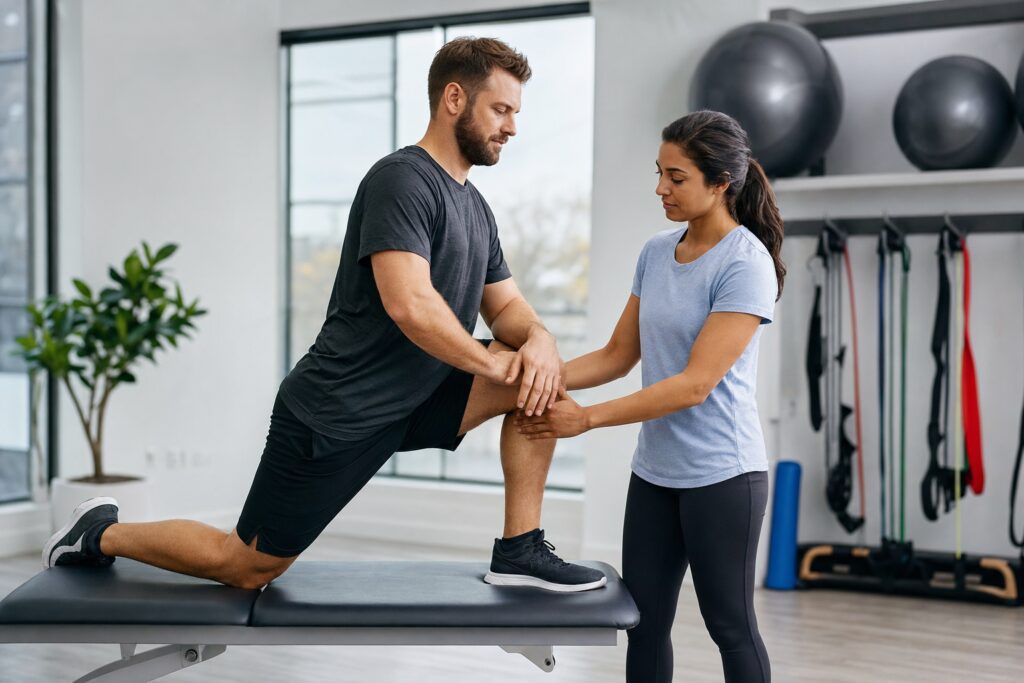
Walking into your first physiotherapy session can feel uncertain, especially when you’re not sure what to wear. Most patients don’t realize that proper clothing choices can actually impact the effectiveness of their treatment, and the wrong outfit might prevent your therapist from properly assessing or treating your injury. Whether you’re recovering from a motor vehicle accident, managing chronic pain, or rehabilitating after surgery, wearing appropriate clothing allows your physiotherapist to work directly on the affected area while keeping you comfortable throughout the session.
The clothes you choose affect more than just modesty. They determine whether your therapist can visually assess your posture, access treatment areas, and observe how your body moves during exercise therapy. Your outfit also influences whether you can perform prescribed exercises properly and whether your therapist can use manual therapy techniques effectively on muscles and joints that need attention.
The Core Principles of Physiotherapy Clothing
Loose, comfortable clothing forms the foundation of appropriate physiotherapy attire. Your outfit should allow free movement in all directions without restriction while giving your therapist access to the area being treated.
Athletic wear works exceptionally well for most sessions. Think yoga pants, basketball shorts, or loose-fitting athletic pants that won’t bind when you bend, stretch, or move through rehabilitation exercises. At ProMed Wellness Centre in North York, our multidisciplinary team often works with patients through a full range of motion assessments, which require clothing that moves with you rather than against you.
Breathable fabrics matter more than you might expect. Cotton and moisture-wicking materials keep you comfortable during active exercise sessions, especially when you’re working hard on strengthening exercises or cardiovascular rehabilitation. Synthetic blends designed for athletic activity help manage perspiration while maintaining comfort.
Avoid restrictive clothing like tight jeans, dress pants, business skirts, or anything with a rigid waistband. These items limit movement and make it difficult for your therapist to observe joint mechanics or muscle activation patterns during functional movements.
Dressing for Specific Body Areas Under Treatment
The location of your injury or pain dictates specific clothing requirements. Understanding these nuances ensures your therapist can deliver the most effective treatment possible.
Lower Body and Leg Injuries
For knee, ankle, hip, or lower leg conditions, wear shorts that end above the knee or loose athletic pants that can easily roll up past the knee. Your physiotherapist needs to see and access the entire joint structure, observe muscle activation, and apply hands-on techniques without fabric interference.
Tank tops might seem unrelated to leg injuries, but they’re useful when your therapist assesses your entire kinetic chain. Hip problems often relate to core stability and spinal alignment, so your therapist may need to observe your trunk and shoulder positioning during movement patterns.
Shoulder, Neck, and Upper Body Conditions
Tank tops, sports bras, or loose t-shirts work best for shoulder and neck treatments. Your therapist needs clear visual and physical access to your shoulder blades, upper spine, and collar bone area. Women should wear a sports bra or comfortable athletic top that allows the therapist to assess shoulder blade movement and upper back posture.
Loose-fitting t-shirts work if they have wide neck openings and can be easily pulled aside. However, tight-fitting athletic tops or dress shirts restrict access and limit what your therapist can observe during movement assessments. Our team at ProMed Wellness Centre frequently combines massage therapy techniques with physiotherapy for shoulder conditions, requiring direct skin access to tight muscles around the shoulder girdle.
Back and Spine Treatment
Two-piece outfits offer the best solution for back and spine conditions. Wear a sports bra or fitted tank top on top with loose pants or shorts on the bottom. This combination allows your physiotherapist to lift your shirt for spinal assessment and manual therapy while maintaining appropriate coverage.
Your therapist may need to observe your entire spine during movement, assess posture from multiple angles, or apply hands-on techniques to specific vertebrae. Single-piece outfits or dresses make this assessment process unnecessarily complicated.
Footwear Considerations That Most Patients Overlook
Bring athletic shoes even if you don’t think you’ll need them. Many physiotherapy sessions include gait analysis, balance training, or functional exercises that require proper footwear.
Your everyday shoes reveal important information about your movement patterns. Wear them to your appointment, but bring athletic shoes for exercise portions. The wear patterns on your regular footwear help your physiotherapist understand how you distribute weight and which muscles might be compensating for weaknesses elsewhere.
For ankle and foot conditions, wear shoes that slip on and off easily. You’ll likely remove them multiple times during your session as your therapist examines joint mobility, muscle strength, and functional movement patterns. Our North York clinic offers chiropody services and custom orthotics, so patients with foot conditions often benefit from bringing the shoes they wear most frequently for assessment.
Avoid boots, high heels, or complicated lacing systems on treatment days. They waste time and create unnecessary frustration when you need to remove them repeatedly.
What to Bring Beyond Just Clothing
A small gym bag or backpack helps organize everything you need for successful physiotherapy sessions. Pack items that support your comfort and allow full participation in your treatment plan.
Bring a water bottle to every session. Hydration supports tissue healing and helps your body respond better to manual therapy and exercise. You’ll also need it during more intense rehabilitation sessions that build cardiovascular endurance or muscular strength.
A hair tie keeps long hair secured during treatment. You’ll be moving, lying down on treatment tables, and potentially sweating during exercise therapy. Loose hair becomes a distraction and nuisance.
Some patients benefit from bringing a change of clothes if they’re coming directly from work or heading to other commitments afterward. At ProMed Wellness Centre, our multilingual staff welcomes patients throughout the day, and many arrive in business attire but change into athletic wear for their session before changing back.
Insurance cards and any relevant medical documentation should come with you, especially for initial assessments. Our direct billing service handles many insurance providers, but having your information readily available streamlines the administrative process.
Special Situations and Treatment-Specific Clothing
Post-surgical rehabilitation requires extra clothing considerations. If you have surgical incisions, dressings, or medical devices, wear clothing that provides easy access without requiring complete undressing. Button-front shirts work well for shoulder surgeries, while elastic-waist pants suit abdominal or hip procedures.
Workplace injury rehabilitation through WSIB often involves simulating work-related movements. Bring clothing that allows you to perform job-specific tasks your therapist might incorporate into functional training. Construction workers might need sturdy pants for squatting exercises, while office workers should wear clothing suitable for desk posture assessment.
Motor vehicle accident recovery sometimes involves treating multiple body areas simultaneously. Wear layered, flexible clothing that can be adjusted as your therapist works on different regions. Our multidisciplinary approach at ProMed Wellness Centre often combines physiotherapy with chiropractic care for MVA patients, requiring clothing access to both the spine and affected extremities.
Acupuncture combined with physiotherapy requires skin access at specific meridian points. If your treatment plan includes this combination, wear loose clothing that can roll up easily past elbows and knees or separate pieces that can be partially removed.
Common Clothing Mistakes That Hinder Treatment Progress
Overdressing ranks as the most frequent error. Patients worry about modesty and arrive in multiple layers that prevent proper assessment and treatment. Your physiotherapist is a medical professional trained to maintain appropriate draping and professional boundaries. Wearing too many clothes only limits treatment effectiveness.
Jewelry and accessories create unnecessary obstacles. Remove watches, bracelets, necklaces, and earrings if they’re in or near the treatment area. These items interfere with manual therapy techniques and can get caught during exercises or movement assessments.
Forgetting about underwear choices seems minor but matters during treatment. Wear comfortable, non-restrictive undergarments. For men treating hip or lower back conditions, boxer briefs work better than boxers. Women should choose sports bras for upper body treatments rather than underwire bras that restrict thoracic mobility.
Wearing brand-new athletic shoes to physiotherapy creates problems. Break in new footwear before your session, as stiff shoes alter your natural gait pattern and prevent accurate movement assessment. Your therapist needs to see how you move in your normal state, not how you adjust to uncomfortable new shoes.
Seasonal Considerations for Toronto Area Patients
Winter months in North York present unique challenges. You’ll arrive bundled in heavy coats, boots, and layers, but you need light, flexible clothing for your actual session. Always bring a change of clothes during Canadian winters rather than trying to work around winter wear.
Snow boots should be removed immediately upon arrival, with clean athletic shoes changed into for your session. The salt, moisture, and heavy construction of winter boots make them unsuitable for any aspect of physiotherapy treatment or exercise.
Summer heat doesn’t excuse inappropriate clothing. While shorts and tank tops suit the weather, ensure they’re athletic-appropriate rather than casual beach or street wear. Your clothing should stay in place during vigorous exercise and various positions on treatment tables.
Layering works year-round because clinic temperatures vary and your body temperature changes during active exercise. Wear a light jacket or hoodie over your athletic top so you can adjust as needed throughout your session.
Frequently Asked Questions About Physiotherapy Attire
Can I wear jeans to my physiotherapy appointment?
Jeans are generally not appropriate for physiotherapy sessions. They restrict movement, prevent your therapist from accessing treatment areas, and make it difficult to observe joint mechanics during movement assessments. If you’re coming from work or other commitments, bring athletic wear to change into at the clinic. The only exception might be an initial consultation focused primarily on discussion rather than physical assessment, but even then, loose athletic pants provide better options.
Should I wear shorts or pants for knee physiotherapy?
Shorts work best for knee physiotherapy because they provide clear access and visibility for the entire knee joint, thigh muscles, and lower leg. Your physiotherapist needs to see muscle activation patterns, observe patellar tracking, and apply hands-on techniques to structures around the knee. If you prefer pants, choose athletic pants that easily roll above the knee and stay in place without constant readjustment.
What should women wear for lower back treatment?
Women should wear a two-piece outfit for lower back treatment, such as a sports bra or fitted tank top paired with loose athletic pants or shorts. This combination allows your physiotherapist to lift your top shirt for spinal assessment while your lower half remains appropriately covered. Avoid one-piece outfits, dresses, or rompers that would need to be completely removed for back access. A sports bra alone is also completely appropriate if you’re comfortable with that level of coverage during treatment.
Do I need to bring running shoes to every physiotherapy session?
Bring athletic shoes to every session unless your physiotherapist specifically tells you otherwise. Even if your current appointment focuses on manual therapy, your treatment plan might progress to include exercises, gait training, or balance work. Having proper footwear available ensures you can participate fully in whatever your therapist determines is appropriate for that day’s session. Shoes also protect your feet in clinical environments and provide necessary support during functional movements.
Can I wear my work clothes if I’m coming during my lunch break?
Work clothes rarely provide appropriate access or flexibility for effective physiotherapy treatment. Instead, bring athletic wear in a small bag and change at the clinic before your session. Most physiotherapy clinics, including ours at 2001B Finch Ave West in North York, provide changing areas for patient convenience. Changing takes only a few minutes and dramatically improves treatment quality compared to working around restrictive work attire. If changing is absolutely impossible, call ahead to discuss your specific treatment needs and clothing limitations with your therapist.
The right clothing choices support every aspect of your physiotherapy treatment, from initial assessment through active rehabilitation and eventual discharge. Your outfit determines whether your therapist can properly evaluate your condition, access treatment areas effectively, and guide you through exercises that restore function and reduce pain.
Ready to start your recovery journey with proper preparation? Book your appointment at ProMed Wellness Centre where our multidisciplinary team provides comprehensive physiotherapy, chiropractic care, massage therapy, osteopathy, and more. Located at 2001B Finch Ave West in North York, we offer direct billing, no referral requirements, and multilingual staff to support your path to better health. Call us at (647) 349-8765 or schedule online today.